


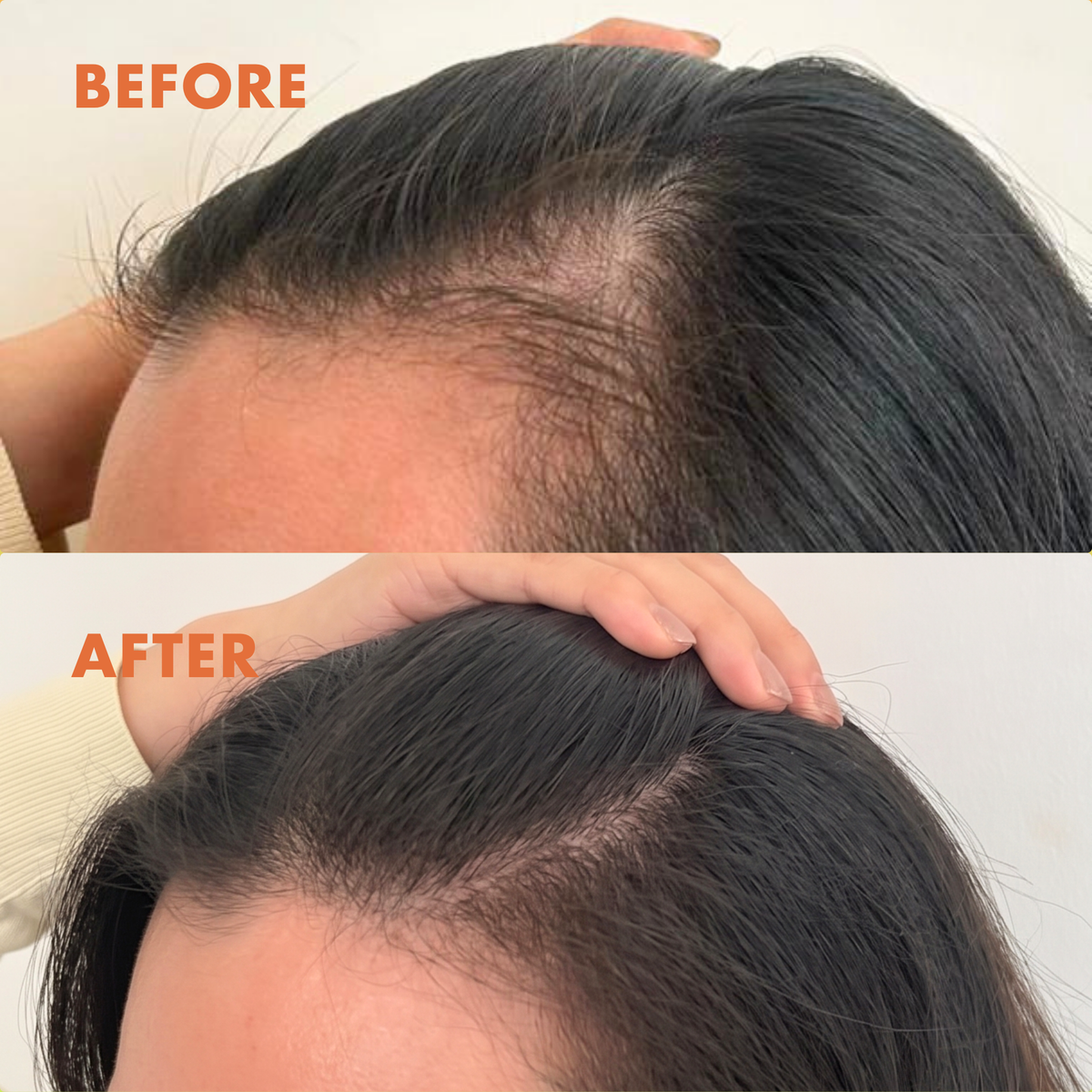
TL;DR: A stressful stretch can tip a chunk of your hair into its shedding phase about two to three months later — dermatologists call it telogen effluvium, and it’s usually temporary, settling within months once the trigger passes. Be gentle, cover the basics, support your scalp (there’s a gentle daily way to do that), and see a doctor if it drags on. (General info, not medical advice.)
Why stress makes you shed (the actual mechanism)
Your hair grows in cycles: at any time most of it is growing while a smaller share rests and sheds. A big physical or emotional shock — serious illness, surgery, major trauma, months of poor sleep — can push an unusually large share of hairs into that resting-then-shedding phase at once. Dermatologists call it telogen effluvium, and the giveaway is timing: the extra shedding usually appears two to three months after the stressful event, which is why it feels like it came from nowhere (StatPearls, NIH).
The reassuring part: it’s usually temporary
Telogen effluvium is a reactive process, not your follicles giving up. Acute cases typically settle within three to six months once the trigger is dealt with, and the hair cycle rebalances (StatPearls). What quietly drags it out is an unaddressed underlying cause.
What actually helps
- Address the trigger and the basics — sleep, enough food, and managing the stress itself do more than any product.
- Mind iron and protein. Nutritional gaps (especially low iron) are among the most common — and most missed — contributors to shedding, and they’re very treatable; ask your doctor to check if you’re unsure (StatPearls).
- Be gentle — loose styles, soft handling, easy on heat while you’re shedding more than usual.
- Look after the scalp, since healthy-looking hair starts at a healthy-looking scalp.
The botanicals behind our pick
Two of the most-studied botanicals in hair care are rosemary and pumpkin seed. In a 2015 randomised trial, rosemary oil performed comparably to 2% minoxidil for pattern hair loss over six months, with less scalp itching (Panahi et al., Skinmed 2015); and a 2014 trial found oral pumpkin seed oil increased hair count versus placebo in men with pattern hair loss (Cho et al., 2014). To be precise: those studies looked at pattern hair loss (and the pumpkin seed one used an oral supplement), not temporary shedding — so treat them as why these botanicals are interesting for hair, not a promise.
The 10-second daily habit that puts you back in control
Here’s the good news: while your body resets, you don’t have to just watch the shower drain and hope. A little daily attention to your scalp is the one move that’s completely in your control — and doing something feels a great deal better than doing nothing.
That’s exactly what our Let It Thrive Hair Tonic is made for. It’s a lightweight, leave-in scalp tonic built on rosemary and pumpkin seed extract — the same botanicals above — that supports a healthy-looking scalp and the appearance of fuller, thicker-looking hair, with no prostaglandins and no biotin. One spray, a 30-second massage, and it becomes a gentle, supportive step for your scalp while your hair finds its rhythm again.
If you’re going to build one small ritual through the shed, make it the easy one. Give your scalp its daily 10 seconds — shop the Let It Thrive Hair Tonic. See the full hair range.
When to see a professional
If shedding is sudden, patchy, comes with a sore or flaky scalp, or hasn’t settled after a few months, see a doctor or dermatologist — they can check for things like iron deficiency or thyroid changes (StatPearls).
Stress-shedding FAQ
How long does stress shedding last? Acute telogen effluvium usually eases within three to six months once the trigger passes.
Why did it start months after my stressful period? That delay is the hallmark — hairs pushed into the resting phase shed two to three months later.
Can a scalp tonic fix it? No product “fixes” telogen effluvium — it resolves as the trigger does. A conditioning scalp tonic is supportive cosmetic care for your scalp and the look of fuller hair.
Sources
- Telogen Effluvium — StatPearls, NIH/NCBI. ncbi.nlm.nih.gov
- Panahi et al., “Rosemary oil vs minoxidil 2% for androgenetic alopecia,” Skinmed 2015;13:15–21. reference
- Cho et al., “Effect of Pumpkin Seed Oil on Hair Growth…,” Evid Based Complement Alternat Med 2014. PMC
Real ingredients. Real results.


Leave a comment
All comments are moderated before being published.
This site is protected by hCaptcha and the hCaptcha Privacy Policy and Terms of Service apply.