


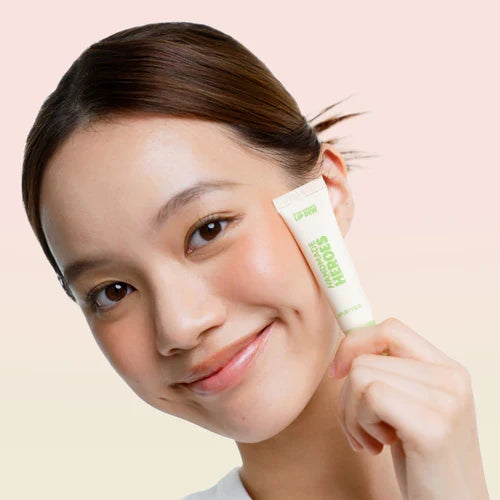
Your lips crack in the aircon, chap on the walk to the MRT, and never once produce a drop of their own oil to defend themselves. That's not bad luck — it's biology. Lips have no oil glands, so they're working with a thinner, drier barrier than the rest of your face from the start (Cleveland Clinic).
Why lips dry out faster than everywhere else
The skin on your lips skips the sebaceous glands that keep the rest of your face lightly oiled and cushioned against moisture loss. It's also thinner, with fewer layers standing between the surface and the air (Cleveland Clinic). Put those two facts together and lips lose water faster than cheeks or forehead ever will, with nothing built in to slow it down.
Singapore's climate doesn't do lips any favours. Aircon pulls humidity out of indoor air, the equatorial sun adds UV stress on top, and moving between cold malls and hot pavement all day is its own kind of barrier workout. Dehydration and the habit of lip-licking make it worse — saliva evaporates fast and actually leaves lips drier than before it landed (Cleveland Clinic).
The cosmetic fix: buff away the flakes, then seal
Once a surface layer of dry, flaky skin builds up, lip balm alone has less to work with — it ends up sealing over flakes instead of a smooth surface. A gentle scrub buffs that top layer away so a balm or mask can actually do its job afterwards. This is cosmetic care, not a cure: it smooths and preps the surface for softer-looking, more comfortable lips, not a treatment for an underlying condition.
The trick is gentle and occasional, not daily and aggressive. Dermatologists point to over-stripping, fragrance-heavy routines as part of the problem, not the fix (AAD). Skip the urge to pick at flaking skin with your fingers or teeth — that pulls at skin that isn't ready to come off and can slow things down.
Where the Cocolicious Luscious Lip Scrub comes in
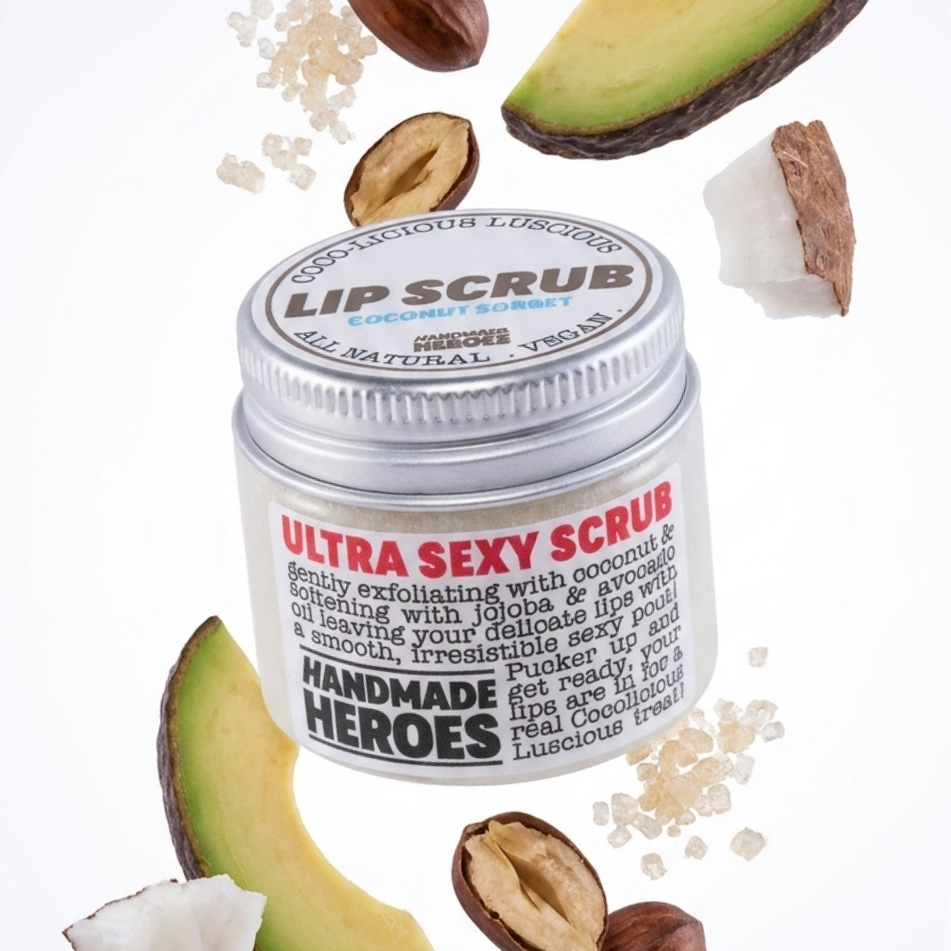
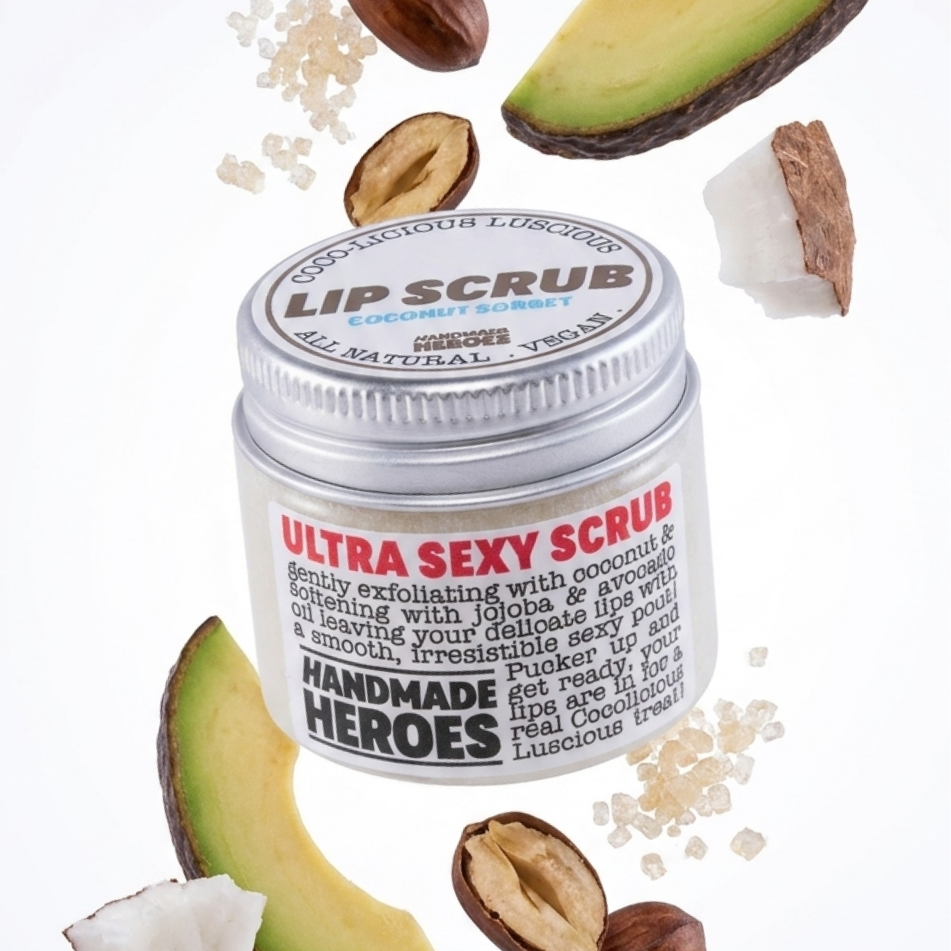
Our Cocolicious Luscious Lip Scrub is a fine coconut-sugar scrub in a tub, built to do exactly this job without overdoing it. Coconut sugar buffs away the flaky layer while jojoba oil and avocado oil keep the whole thing from feeling like sandpaper, and the Coconut Sorbet scent makes the thirty seconds feel like a treat, not a chore. It's vegan, cruelty-free, and naturally derived.
Buff a pea-size amount onto damp lips with a fingertip or lip brush, two to three times a week, then follow with a balm or mask to lock in the smoothness. That's a smoothing habit that clears the way for whatever comes next — not a fix for lips that need more than a scrub can give.
Shop the Cocolicious Luscious Lip Scrub.
When it's more than dryness
If lips are cracked, persistently painful, or bleeding, that's past what a scrub and balm should be asked to fix. It can point to a more specific condition dermatologists call cheilitis, and it's worth a doctor's or dermatologist's look rather than more product (Cleveland Clinic; AAD). This article is general information, not medical advice.
FAQ
How often should I exfoliate chapped lips? Two to three times a week is enough for most people — more than that can irritate skin that's already compromised.
Can I exfoliate lips that are already cracked? Skip it until the cracking settles, or check with a doctor first — scrubbing broken skin isn't the goal here.
What should I do after scrubbing? Follow straight away with a hydrating balm or mask while lips are still slightly damp, so the moisture has something to hold onto.
Related reading
How to Use a Lip Scrub · What's Actually in Cocolicious: Every Ingredient, Explained · Lip Scrub vs Lip Mask vs Lip Oil
Sources
- Chapped Lips (Cheilitis): Causes, Treatment & Prevention — Cleveland Clinic. my.clevelandclinic.org
- 7 dermatologists' tips for healing dry, chapped lips — American Academy of Dermatology. aad.org
Real ingredients. Real results.

Leave a comment
All comments are moderated before being published.
This site is protected by hCaptcha and the hCaptcha Privacy Policy and Terms of Service apply.