


Caffeine
Caffeine
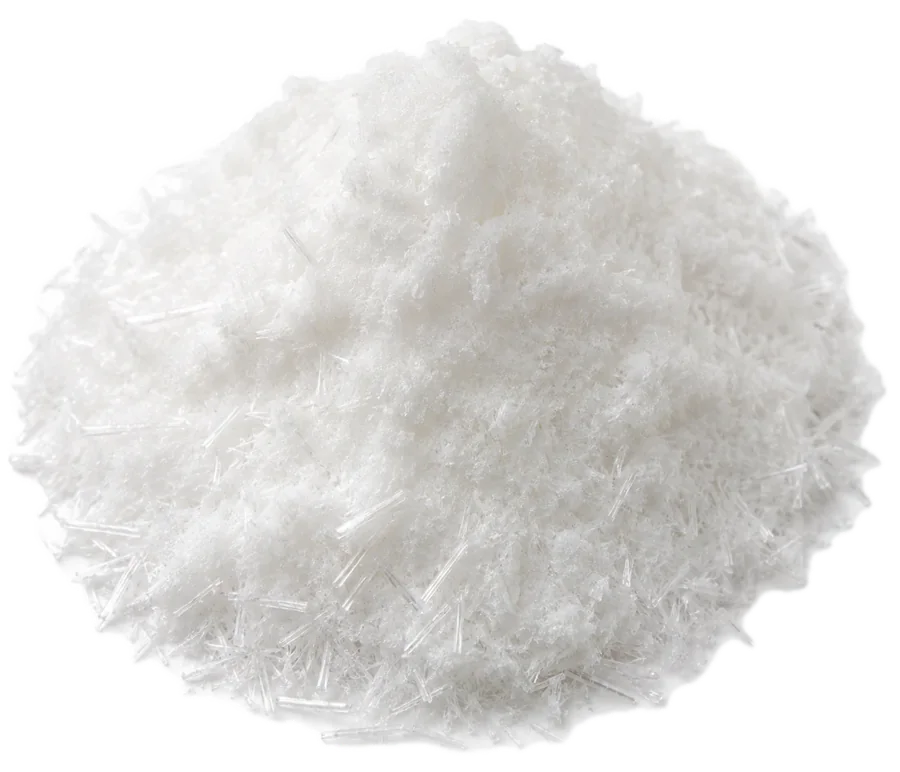
Caffeine is a plant alkaloid from tea and coffee that skincare uses because it gets into skin easily
The short version
- A purine alkaloid found naturally in tea and coffee
- Gets through the skin's outer layer well, so researchers use it as a test molecule
- Topical products commonly contain around 3%
- The two under-eye studies here are small and mix caffeine with other ingredients
- An expert panel concluded it's safe as used in cosmetics
The good
- Combination eye pads reduced wrinkle depth and dark circles in an 11-woman, single-blind split-face study.6
- An expert panel found caffeine safe at the cosmetic-use practices and concentrations it reviewed.10
The not so good
- The under-eye studies were small and used blends, leaving caffeine's own contribution uncertain.67
- The eye-cream study was open-label, and three authors listed affiliations with Revision Skincare.7
The origin story
Caffeine occurs naturally in plants, including coffee and tea.1112
Chemists isolated it in the early 1800s, but the date and credit aren't agreed on.111213 One account credits the German chemist Friedlieb Ferdinand Runge in 1819, while another names the German scientists Runge and Von Giese in 1820.111213 Runge called his material “Kaffebase.”1113
What is caffeine?
Caffeine is a purine alkaloid that occurs naturally in tea and coffee.
Chemists call it a trimethylxanthine, because it carries three methyl groups.2
In the EU's cosmetic ingredient database, its official jobs are skin conditioning, perfuming and fragrance. No legal limit or EU safety opinion is listed for it.1 A safety review files it alongside two close relatives, theobromine and theophylline, and says all three work as skin-conditioning agents in cosmetics. Under the ASEAN rules Singapore follows, theophylline must not be used in cosmetics.1410
What does caffeine do in an eye serum?
Caffeine's big selling point in an eye serum is that it actually gets into skin.
A 2013 review says caffeine can penetrate the skin barrier, and commercial topical formulas normally contain 3%.3 It's such a reliable traveller that skin-absorption researchers use it as their go-to water-loving test molecule.4
Why the eye area? A 2023 review says small trials of caffeine on dark, puffy under-eyes look promising, and that the effect is believed to come from caffeine narrowing blood vessels in that thin skin.5 The 2013 review says caffeine increases blood flow in the skin generally.3
The same 2013 review also describes caffeine as a strong antioxidant.3
What the research says
A 2024 review of eye-cream ingredients puts caffeine on the promising list, then flags the lack of clinical trials on eye creams and the skin around the eyes as a notable limitation.9
The 2023 review agrees that larger, high-quality studies are needed.5
Caffeine eye padsAdvances in Biomedical Research, 2015 · 11 people
Single-blind, split-face study · 11 healthy women · pad with 3% caffeine and 1% vitamin K under one eye, water pad under the other · 4 weeks
The authors report less wrinkle depth and fewer dark circles on the caffeine side in every participant.
Limits Tiny. Vitamin K and emu oil were in the pad too, and the placebo was just water, so caffeine's own share is unknown. The abstract doesn't report on puffiness.
A multi-ingredient eye creamJournal of Cosmetic Dermatology, 2024 · 40 people
Open-label study · 40 women aged 35 to 60 with dark circles and puffiness (37 finished) · eye cream with caffeine, vitamin C, peptides and plant extracts · 12 weeks
Dark circles improved significantly, according to the authors.
Limits Open-label, with several actives in one cream. Three authors list affiliations with Revision Skincare.
Caffeine and the skin barrierInternational Journal of Cosmetic Science, 2006
Double-blind, placebo-controlled study · men and women · 0.5% caffeine gel on one forearm, plain gel on the other · 7 days
Caffeine significantly cut water loss through the skin in men compared with women.
Limits Forearms, not under-eyes, and the effect showed up in men only. The abstract doesn't say how many people took part.
Is caffeine safe on skin?
Caffeine is safe in cosmetics in the present practices of use and concentration, a review panel concluded in 2024.10
The Expert Panel for Cosmetic Ingredient Safety looked at caffeine and two related molecules.10 The 2024 eye-cream review says topical caffeine up to 3% is considered safe and easily absorbed.9
One open question: in lab dishes, caffeine slowed collagen production by skin cells, and the 2023 review says those early results still need testing in people.5 If your skin reacts to an eye product, stop using it and check in with a dermatologist.
Questions people ask
Does caffeine help with under-eye puffiness?
Caffeine looks promising for under-eye puffiness in small trials, according to a 2023 review, possibly because caffeine narrows blood vessels.5 The two under-eye studies on this page were small and paired caffeine with other ingredients: a caffeine and vitamin K pad in 11 women6 and a multi-ingredient eye cream in 40 women.7 The same review says larger, high-quality studies are needed before caffeine's role is established.5
Does caffeine get rid of dark circles?
Caffeine has only a hint of an effect on dark circles so far: in one 4-week study of 11 women, the authors report fewer dark circles under the eye that got a pad with 3% caffeine and 1% vitamin K; the other eye got a water pad.6 That's one tiny study with a combo pad, so treat it as a hint, not a verdict.
How much caffeine is in skincare?
Caffeine in commercial topical products normally comes at 3%, according to a 2013 review.3 A 2024 review says up to 3% is considered safe.9
Does caffeine in skincare absorb into the skin?
Yes, caffeine in skincare penetrates the skin barrier well enough that researchers use it as a standard test molecule in skin-absorption studies.34
Is caffeine safe to use around the eyes?
An expert panel concluded in 2024 that caffeine is safe in cosmetics as currently used.10 A 2024 review says topical caffeine up to 3% is considered safe.9 If your skin reacts, stop and check in with a dermatologist.
Related ingredients
- Green tea EGCG derivative
- Ground coffee
- Hyaluronic acid (sodium hyaluronate)
- Vitamin C (tetrahexyldecyl ascorbate)
Sources
Show all 14 sources
- European Commission. CosIng cosmetic ingredient database: Caffeine. Open source
- National Library of Medicine. PubChem Compound Summary for CID 2519, Caffeine. Open source
- Herman A, Herman AP. Caffeine's mechanisms of action and its cosmetic use. Skin Pharmacology and Physiology. 2013;26(1):8–14. Open source
- Luo L, Lane ME. Topical and transdermal delivery of caffeine. International Journal of Pharmaceutics. 2015;490(1-2):155–164. Open source
- Elias ML, Israeli AF, Madan R. Caffeine in Skincare: Its Role in Skin Cancer, Sun Protection, and Cosmetics. Indian Journal of Dermatology. 2023;68(5):546–550. Open source
- Ahmadraji F, Shatalebi MA. Evaluation of the clinical efficacy and safety of an eye counter pad containing caffeine and vitamin K in emulsified Emu oil base. Advances in Biomedical Research. 2015;4:10. Open source
- Rajabi-Estarabadi A, Hartman CL, Iglesia S, Kononov T, Zahr AS. Effectiveness and tolerance of multicorrective topical treatment for infraorbital dark circles and puffiness. Journal of Cosmetic Dermatology. 2024;23(2):486–495. Open source
- Brandner JM, Behne MJ, Huesing B, Moll I. Caffeine improves barrier function in male skin. International Journal of Cosmetic Science. 2006;28(5):343–347. Open source
- Hamie H, Yassine R, Shoukfeh R, Turk D, Huq F, Moossavi M. A review of the efficacy of popular eye cream ingredients. International Journal of Women's Dermatology. 2024;10(2):e156. Open source
- Cherian PA, Bergfeld WF, Belsito DV, et al. Safety Assessment of Methylxanthines as Used in Cosmetics. International Journal of Toxicology. 2024;43(4 Suppl):42–77. Open source
- Chaudhary A, Mathur D, Gaba R, Pasricha R, Sharma K. Greening up organic reactions with caffeine: applications, recent developments, and future directions. RSC Advances. 2024;14:8932–8962. doi:10.1039/D4RA00432A. Open source
- Lin Z, Wei J, Hu Y, Pi D, Jiang M, Lang T. Caffeine Synthesis and Its Mechanism and Application by Microbial Degradation, A Review. Foods. 2023;12(14):2721. doi:10.3390/foods12142721. Open source
- Baumann TW. Koffein. Vierteljahrsschrift der Naturforschenden Gesellschaft in Zürich. 2010;155(1/2):1–11. Open source
- ASEAN Cosmetic Directive, Annexes II to VII. Version 2026-1, 22 June 2026. Published in Singapore by the Health Sciences Authority. Open source