



Calendula flower extract
Calendula Officinalis Flower Extract
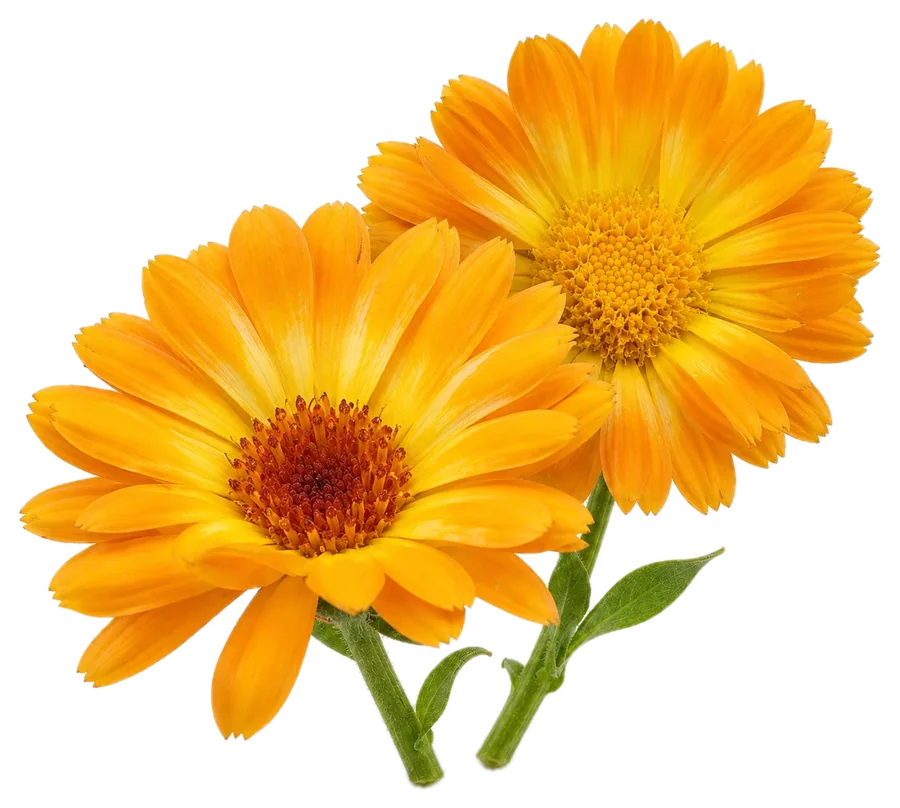
Calendula flower extract is an extract of marigold flowers, a plant long used in herbal medicine, that cosmetics list as skin conditioning
The short version
- Made from the flowers of Calendula officinalis, the common marigold
- Part of the Asteraceae plant family, also called Compositae
- A US expert panel concluded it's safe as used in cosmetics
- One small 8-week cheek study measured better hydration and firmness
- Can cause allergic reactions, especially in people allergic to Asteraceae plants
The good
- In a 21-person cheek study, cream improved measures the authors interpreted as better hydration and firmness.6
- The US CIR panel concluded calendula ingredients are safe in cosmetics as currently used.3
The not so good
- Most measurements showed no statistically significant change; the abstract reports neither blinding nor randomisation.6
- Marigold caused positive patch tests in patients already being assessed for skin allergies.7
The origin story
Calendula flower extract comes from the flowers of Calendula officinalis, the common marigold.249
People were using calendula medicinally in the 12th century.910 In 1753, Linnaeus published the name Calendula officinalis in Species Plantarum.1112 By 2009, calendula flower extracts were being used in cosmetics.25 Their cosmetic jobs include skin conditioning.59
What is calendula flower extract?
Calendula flower extract is an extract of the flowers of Calendula officinalis, the common marigold.2
The plant belongs to the Asteraceae family, and people have used it medicinally for millennia.1
Making it can be pretty low-tech. Methods reported to the US Cosmetic Ingredient Review include gently breaking the flowers down in soybean oil, or extracting them with propylene glycol or butylene glycol.2
What's in calendula?
Calendula flowers contain a lot: flavonoids, triterpenoids, saponins, carotenoids, volatile oil, sterols and more.1
One 2022 review counted 656 different compounds found across five Calendula species.4 How much of each ends up in a given extract depends on how it was made, and safety reviewers have pointed out that data on one calendula extract can't automatically be applied to the same ingredient extracted differently.2
What does calendula do in skincare?
Calendula flower extract's official cosmetic job is skin conditioning.5
Back to the listWhat the research says
So: one small cosmetic study with a plain-cream comparison, and some clinic data on who reacts to it.67
Promising, and far from settled.
Calendula cream on cheeksActa Poloniae Pharmaceutica, 2011 · 21 people
8-week study · 21 healthy volunteers · calendula extract cream vs. a plain base cream, both on the cheeks, measured weekly with a skin-elasticity device
Two of seven skin measurements changed significantly with the calendula cream, which the authors read as better hydration and firmness.
Limits Small, and the abstract doesn't give the extract strength or say whether the study was blinded or randomised. Five of the seven measurements showed no significant change.
Patch tests at a dermatology clinicContact Dermatitis, 2001
Patch testing · 443 consecutive patients · marigold, arnica and other plant allergens
Nine patients, about 2.03%, reacted to marigold. These reactions often came alongside reactions to other allergens.
Limits These were people already being checked for skin allergies, so the rate doesn't apply to everyone.
Is calendula safe for skin?
The US Cosmetic Ingredient Review panel looked at calendula extract, flower, flower extract, flower oil and seed oil in 2010.
In animal and clinical tests they weren't irritating, sensitising or photosensitising, though they may mildly irritate eyes, and the panel concluded they're safe in cosmetics as currently used.3 That was an upgrade: in 2001 the same panel said the data were insufficient.2
Good to know
Allergies to Asteraceae (Compositae) plants are the main thing to watch with calendula.
A review of Compositae allergies lists calendula among the plants suspected of causing them, while noting the calendula evidence is anecdotal.8 If your skin gets red or itchy, stop using the product and check in with a dermatologist.
Questions people ask
Is calendula the same as marigold?
Yes, calendula extract comes from the common marigold. Calendula officinalis is known as the common marigold, and calendula extract is made from its flowers.2
What does calendula do for skin?
Calendula is used in cosmetics as a skin conditioning agent.5 One small 8-week study reported that measurements with a calendula cream on the cheeks reflected better hydration and firmness.6
Is calendula safe in skincare?
A US expert panel concluded in 2010 that calendula flower extract and related calendula ingredients are safe in cosmetics as currently used. In the animal and clinical tests it reviewed, they weren't irritating or sensitising, though they may mildly irritate eyes.3
Can you be allergic to calendula?
Yes, you can be allergic to calendula. In one clinic study, about 2.03% of 443 patients reacted to marigold on patch testing.7
Find it in
Back to the listRelated ingredients
Back to the listSources
Show all 12 sources
- Shahane K, Kshirsagar M, Tambe S, et al. An Updated Review on the Multifaceted Therapeutic Potential of Calendula officinalis L. Pharmaceuticals (Basel). 2023;16(4):611. Open source
- Cosmetic Ingredient Review. Final report on the safety assessment of Calendula officinalis extract and Calendula officinalis. International Journal of Toxicology. 2001;20(Suppl 2):13–20. Open source
- Andersen FA, Bergfeld WF, Belsito DV, et al. Final report of the Cosmetic Ingredient Review Expert Panel amended safety assessment of Calendula officinalis-derived cosmetic ingredients. International Journal of Toxicology. 2010;29(6 Suppl):221S–243S. Open source
- Olennikov DN, Kashchenko NI. Marigold Metabolites: Diversity and Separation Methods of Calendula Genus Phytochemicals from 1891 to 2022. Molecules. 2022;27(23):8626. Open source
- Re TA, Mooney D, Antignac E, et al. Application of the threshold of toxicological concern approach for the safety evaluation of calendula flower (Calendula officinalis) petals and extracts used in cosmetic and personal care products. Food and Chemical Toxicology. 2009;47(6):1246–1254. Open source
- Akhtar N, Zaman SU, Khan BA, Amir MN, Ebrahimzadeh MA. Calendula extract: effects on mechanical parameters of human skin. Acta Poloniae Pharmaceutica. 2011;68(5):693–701. Open source
- Reider N, Komericki P, Hausen BM, Fritsch P, Aberer W. The seamy side of natural medicines: contact sensitization to arnica (Arnica montana L.) and marigold (Calendula officinalis L.). Contact Dermatitis. 2001;45(5):269–272. Open source
- Paulsen E. Contact sensitization from Compositae-containing herbal remedies and cosmetics. Contact Dermatitis. 2002;47(4):189–198. Open source
- Szopa A, Klimek-Szczykutowicz M, Jafernik K, Koc K, Ekiert H. Pot marigold (Calendula officinalis L.) – a position in classical phytotherapy and newly documented activities. Acta Scientiarum Polonorum Hortorum Cultus. 2020;19(3):47–61. doi:10.24326/asphc.2020.3.5. Open source
- Shahane K, Kshirsagar M, Tambe S, Jain D, Rout S, Ferreira MKM, Mali S, Amin P, Srivastav PP, Cruz J, Lima RR. An Updated Review on the Multifaceted Therapeutic Potential of Calendula officinalis L. Pharmaceuticals. 2023;16(4):611. doi:10.3390/ph16040611. Open source
- Manaaki Whenua – Landcare Research. Biota of New Zealand: Calendula officinalis L., nomenclatural record. Accessed 22 November 2026. Open source
- University of Zagreb, Faculty of Science, Department of Botany. Flora Croatica Database: Calendula officinalis L., taxon 2033. Accessed 22 November 2026. Open source