


Citric acid
Citric Acid
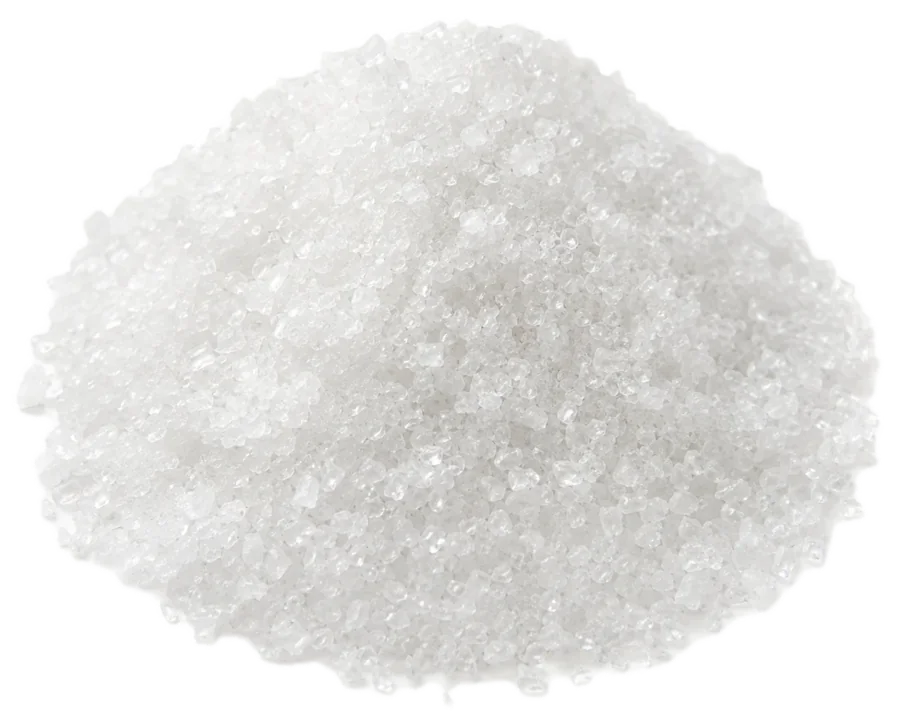
Citric acid is an acid that cosmetics use to set a product's pH
The short version
- Listed as a pH adjuster, chelating agent and fragrance ingredient
- Most commercial citric acid is made by fermentation, not squeezed from fruit
- Reported maximums: 4% in leave-on, 10% in rinse-off products
- Judged safe as used by a US expert panel
- Predicted to irritate eyes in lab tests
The good
- Human tests found no skin irritation with up to 5% citric acid in water.1
- The CIR Expert Panel found citric acid safe at reviewed cosmetic uses and concentrations.2
The not so good
- Skin-prick tests were positive in 3 of 91 people who already had urticaria or angioedema.1
- Lab tests predicted eye irritation.1
The origin story
Citric acid was first isolated from lemon juice in 1784 by Carl Scheele.45
Accounts disagree on where this happened, giving England and Sweden.45
In 1917, Currie developed a way to make citric acid with the fungus Aspergillus niger in a sugar-containing culture.46 Today, citric acid helps set the pH of cosmetics and works as a chelating agent.24
What is citric acid?
Citric acid is an acid that occurs naturally in plant and animal tissue, and it can be recovered from lemon or pineapple juice.3
The citric acid in products mostly comes from a factory, though: over 99% of the world's supply is made by microbial fermentation, most commonly of crude sugar stocks like molasses.1
What does citric acid do in a formula?
Citric acid is reported to work as a pH adjuster, a chelating agent or a fragrance ingredient.12
A pH adjuster is there to set how acidic the formula is.
How much is used?
Citric acid had 6795 reported uses in 2011 US industry data.1
The highest reported concentrations were up to 4% in leave-on products, 10% in rinse-off products and 39% in products diluted for the bath.1 In sprays the maximum reported was 0.7%.1
Is citric acid safe?
The Cosmetic Ingredient Review Expert Panel concluded that citric acid is safe in the present practices of use and concentration.2
It leaned on the food-safety record for swallowing, since citric acid is a GRAS food additive, and focused on skin.1
In human tests, citric acid wasn't a skin irritant at up to 5% in water, and a cuticle cream with 4% citric acid wasn't an irritant or a sensitiser.1 One skin prick test used 2.5% citric acid in water and gave positive results in 3 of 91 people who already had urticaria or angioedema.1 In lab tests it was predicted to be an eye irritant, and in rabbit eyes it was minimally irritating at 10%.1
Good to know
The panel treats citric acid as a different kind of molecule from the AHAs glycolic and lactic acid.1
So it judged AHA concerns don't apply to it.1 If a product with it stings or you get a rash, stop using it and check in with a dermatologist.
Questions people ask
Is citric acid natural?
Citric acid occurs naturally in plant and animal tissue, and lemon or pineapple juice can be a source.3 Most commercial citric acid is made by fermentation, though.1
Is citric acid safe for skin?
Citric acid is safe in the present practices of use and concentration, according to a US expert panel's conclusion.2 In human tests it wasn't a skin irritant at up to 5% in water.1
Is citric acid an AHA?
Yes, citric acid is structurally an AHA, according to the expert panel, though it is a tricarboxylic acid chemically and biologically distinct from glycolic and lactic acid.1
How much citric acid is in skincare?
Citric acid is reported at up to 4% in leave-on products and 10% in rinse-off products in US reports.1
Find it in
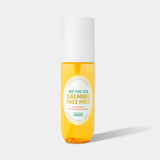
- sip the tea calming face mist $18.90
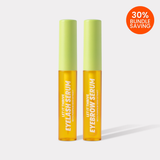
- let it thrive eyebrow serum $34.90
- let it thrive eyelash serum $34.90
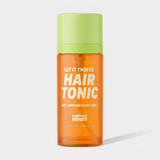
- let it thrive hair tonic $42.90
- sip the tea calming gel mask $34.90
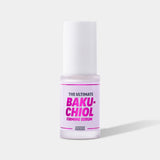
- the ultimate bakuchiol firming serum $34.90
Related ingredients
Back to the listSources
Show all 6 sources
- Cosmetic Ingredient Review Expert Panel. Final Report on the Safety Assessment of Citric Acid, Inorganic Citrate Salts, and Alkyl Citrate Esters as Used in Cosmetics. Cosmetic Ingredient Review, report dated March 27, 2012. Open source
- Fiume MM, Heldreth BA, Bergfeld WF, et al. Safety Assessment of Citric Acid, Inorganic Citrate Salts, and Alkyl Citrate Esters as Used in Cosmetics. Int J Toxicol, 2014, 33(2 suppl), 16S-46S. Open source
- US Code of Federal Regulations. 21 CFR 184.1033, Citric acid. Food and Drug Administration. Open source
- Książek E. Citric Acid: Properties, Microbial Production, and Applications in Industries. Molecules. 2024;29(1):22. Published online December 19, 2023. doi:10.3390/molecules29010022. Open source
- Ciriminna R, Meneguzzo F, Delisi R, Pagliaro M. Citric acid: emerging applications of key biotechnology industrial product. Chemistry Central Journal. 2017;11:22. doi:10.1186/s13065-017-0251-y. Open source
- US Department of Agriculture, Agricultural Marketing Service, National Organic Program. Technical Evaluation Report: Citric acid and its salts, Handling/Processing. February 17, 2015. Open source