


Glycerin
Glycerin
Glycerin is a simple molecule, also called glycerol, that skincare uses as a humectant, meaning it holds on to water
The short version
- A simple molecule with three hydroxyl groups, also called glycerol
- Found in all plant and animal fats; plant, animal and synthetic versions are chemically identical
- Raised skin hydration in several controlled studies on human skin
- Third most reported cosmetic ingredient in 2014 FDA data, after water and fragrance
- Cleared by a US expert safety panel in 2019; reactions are rarely reported
The good
- Raised skin hydration in several controlled human studies.56
- A US expert panel concluded it's safe as a cosmetic ingredient in 2019.2
- Few irritation or allergy reports, despite appearing in 15,654 products in 2014 FDA data.2
The not so good
- Barrier repair results are mixed: one study found it faster, another saw no recovery within 3 hours.47
- Rare reactions do happen, including one person in patch testing.2
The origin story
Glycerin was discovered by Swedish apothecary Carl Wilhelm Scheele, who noticed a sweet matter when he boiled oils with lead oxide and called it the sweet principle of oils.89101112
Old books disagree on when, giving 1779, 1783 and 1789.81213 Later, French chemist Michel-Eugène Chevreul gave it the name glycerine and showed it is released when fats are made into soap.91014 For years, much of it was simply thrown away as a soap and candle byproduct.1013 In the 1850s, Marcellin Berthelot showed that glycerin and fatty acids recombine into natural fats, and the chemist Wurtz reported a way to make glycerin in the lab.91012 By 1856, a medical writer was describing glycerin as a cosmetic agent.13
What is glycerin?
Glycerin is a small, simple molecule with three hydroxyl groups, also called glycerol.2
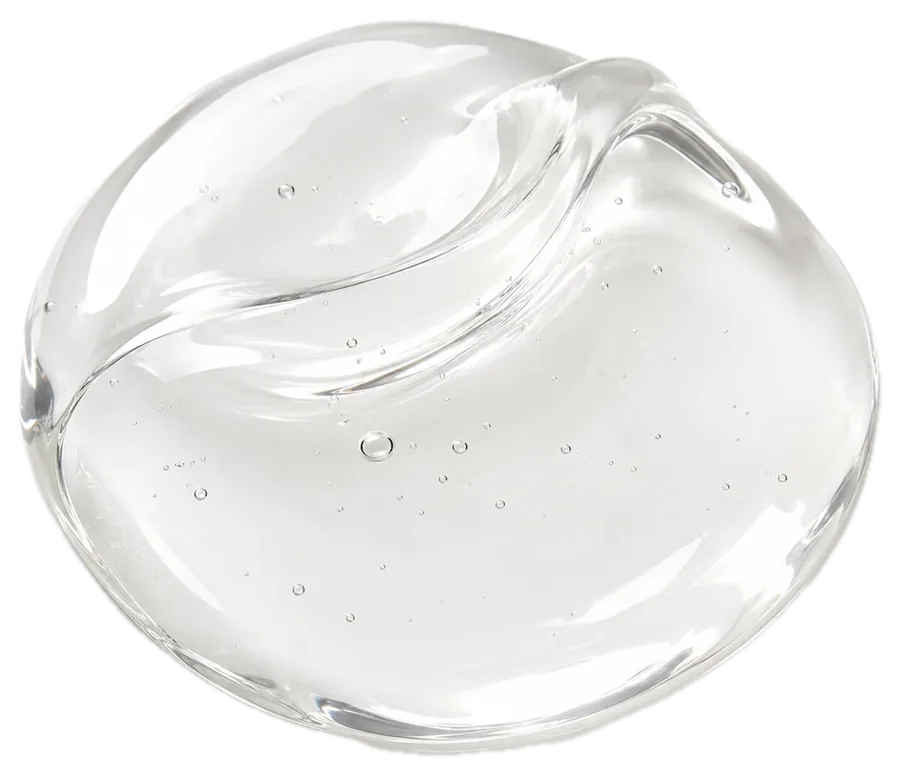
On its own it's a clear, syrupy liquid that mixes completely with water.2
You've met it before. It's in every plant and animal, locked into fats and oils as glycerides, and the glycerin from plants, animals or a lab is the same chemical.2 Natural glycerin comes out as a byproduct when fats and oils are split apart, while synthetic glycerin can start from materials like propylene oxide or sugars.2 Your skin may even supply some of its own glycerol: a review names a channel called aquaporin-3 as one possible route.3
What does glycerin do in skincare?
Glycerin's headline job is humectant, which means it holds on to water.
That's how the EU's cosmetic ingredient database lists it, along with skin protecting, hair conditioning, solvent and viscosity controlling.1
A 2008 review in the British Journal of Dermatology pulled the skin research together. It listed better hydration of the outer skin layer, better barrier function, better skin mechanics and protection against irritating stuff among glycerol's effects.3
What the research says
In these studies, glycerin added water to the outer skin layer.56
Whether it also speeds barrier repair depends on the test. A 1999 study on tape-stripped or detergent-washed skin found faster barrier repair at glycerol-treated sites over 3 and 7 days.4 A 2010 study on detergent-irritated skin found glycerol rehydrated the skin within 3 hours, but water loss stayed high, so the barrier hadn't recovered in that time.7
Glycerin vs petrolatum, split apartJournal of Cosmetic Dermatology, 2020 · 51 people
Randomised, double-blind, 4-arm crossover · 51 healthy volunteers with dry skin · cream base alone, with glycerol, with petrolatum, or the full cream on the forearm · measured over 12 hours
The glycerol part of the cream improved skin hydration, while the petrolatum part improved barrier function (less water escaping through the skin).
Limits Measurements covered 12 hours after application, and the glycerol level isn't given in the abstract.
Faster barrier repairActa Dermato-Venereologica, 1999
Two controlled studies on test sites · skin barrier damaged on purpose by tape stripping or detergent washing · glycerol vs base or no treatment · followed 3 and 7 days
Glycerol-treated sites showed faster barrier repair in both studies. In the second, the difference from untreated and base-treated sites was significant 7 days after treatment ended.
Limits The abstract doesn't say how many people took part or what concentration was used.
Plain water formulas with humectantsInternational Journal of Cosmetic Science, 2014
Double-blind, randomised, controlled · healthy volunteers · simple water-based formulas under a cover on the forearm for 4 hours
Formulas with urea or glycerol raised skin hydration, even when the formula itself held less free water.
Limits One short, covered application. Number of people not given in the abstract.
After a detergent hitArchives of Dermatological Research, 2010
Forearm study · skin irritated with 10% sodium lauryl sulfate for 3 hours · then glycerol at 1% to 10% in water for 3 hours
Glycerol at 1% to 10% rehydrated the skin, but water loss through the skin stayed high, so the barrier itself hadn't recovered yet.
Limits Very short test on deliberately irritated skin. Number of people not given in the abstract.
Is glycerin safe?
The US Cosmetic Ingredient Review panel looked at it in 2019 and concluded glycerin is safe as a cosmetic ingredient.2
It's also everywhere: in 2014 FDA data it was the third most reported cosmetic ingredient after water and fragrance, showing up in 15,654 products, and leave-on products used it at up to 79.2%.2
Despite all that use, the panel noted few reports of irritation or allergy in the literature, and the FDA treats glycerin as generally recognised as safe in food.2 Rare reactions do happen: the report describes one person who reacted to glycerin in patch testing.2 If your skin gets red, itchy or swollen after a product, stop using it and check in with a dermatologist.
Questions people ask
Is glycerin good for your skin?
Glycerin has solid evidence for skin hydration. In a randomised, double-blind study of 51 volunteers with dry skin, the glycerol part of a cream was what improved skin hydration.5 A 2008 dermatology review also lists effects on barrier function and skin mechanical properties.3
Is glycerin safe in skincare?
Yes, glycerin is safe as used in cosmetics, according to a US expert panel's 2019 conclusion, and the panel noted few reports of irritation or allergy despite how common it is.2
Is vegetable glycerin the same as glycerin?
Yes, vegetable glycerin is chemically the same as glycerin from animals or synthetic routes: it's the same molecule, and only the starting material differs.2
Is glycerin the same as glycerol?
Yes, glycerin and glycerol are the same substance. Glycerin is the cosmetic label name, and glycerol is another name used in the literature.21
Find it in
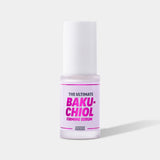
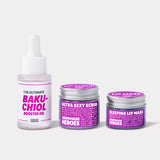
- bakuchiol boosting bundle $68.90
- cocolicious luscious lip scrub - coconut sorbet $12.90
- cocolicious luscious lip scrub - matcha latte $12.90
- cocolicious luscious lip scrub - bakuchiol $15.90
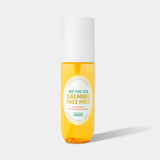
- sip the tea calming face mist $18.90
- let it thrive eyebrow serum $34.90
- let it thrive eyelash serum $34.90
- let it thrive hair tonic $42.90
- sip the tea calming gel mask $34.90
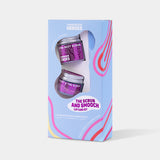
- the scrub & smooch lip care kit $30.80
- the scrub & smooch lip care kit with bakuchiol $34.80
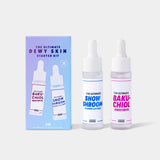
- the ultimate dewy skin starter kit $37.90
- the ultimate snow shroom hyaluronic acid serum $32.90
- cocolicious luscious lip scrub - vitamin c and turmeric lip scrub $12.90
Related ingredients
Back to the listSources
Show all 14 sources
- European Commission. CosIng cosmetic ingredient database: Glycerin. Open source
- Becker LC, Bergfeld WF, Belsito DV, Hill RA, Klaassen CD, Liebler DC, Marks JG Jr, Shank RC, Slaga TJ, Snyder PW, Gill LJ, Heldreth B. Safety Assessment of Glycerin as Used in Cosmetics. International Journal of Toxicology. 2019;38(3 Suppl):6S–22S. Open source
- Fluhr JW, Darlenski R, Surber C. Glycerol and the skin: holistic approach to its origin and functions. British Journal of Dermatology. 2008;159(1):23–34. Open source
- Fluhr JW, Gloor M, Lehmann L, Lazzerini S, Distante F, Berardesca E. Glycerol accelerates recovery of barrier function in vivo. Acta Dermato-Venereologica. 1999;79(6):418–421. Open source
- Vaillant L, Georgescou G, Rivollier C, Delarue A. Combined effects of glycerol and petrolatum in an emollient cream: A randomized, double-blind, crossover study in healthy volunteers with dry skin. Journal of Cosmetic Dermatology. 2020;19(6):1399–1403. Open source
- Albèr C, Buraczewska-Norin I, Kocherbitov V, Saleem S, Lodén M, Engblom J. Effects of water activity and low molecular weight humectants on skin permeability and hydration dynamics: a double-blind, randomized and controlled study. International Journal of Cosmetic Science. 2014;36(5):412–418. Open source
- Atrux-Tallau N, Romagny C, Padois K, Denis A, Haftek M, Falson F, Pirot F, Maibach HI. Effects of glycerol on human skin damaged by acute sodium lauryl sulphate treatment. Archives of Dermatological Research. 2010;302(6):435–441. Open source
- Scheele CW. Discovery of a peculiar sweet and volatile matter which is a constituent part of expressed oils and the fat of animals (English translation, 1786; reprinted in The Chemical Essays of Charles-William Scheele, 1901). Internet Archive scan. Open source
- Hartshorne H. A Monograph on Glycerin and Its Uses. Philadelphia: J. B. Lippincott, 1865. US National Library of Medicine digital collection. Open source
- Demarquay JN. De la glycerine, de ses applications a la chirurgie et a la medecine. Paris, 1863. Internet Archive scan. Open source
- Thorpe TE. Essays in Historical Chemistry. London: Macmillan, 1902 (2nd ed.). Internet Archive scan. Open source
- Berthelot M. Memoire sur les combinaisons de la glycerine avec les acides et sur la synthese des principes immediats des graisses des animaux (doctoral thesis, Paris, 1854). Sorbonne Universite digital library. Open source
- Wardner H. Glycerine: inaugural thesis presented to the Faculty of Rush Medical College, Feb. 1st, 1856. Northwestern Medical and Surgical Journal 1856;5(6):247-252. PMC9970538. Open source
- Berthelot M. Notice historique sur la vie et les travaux de M. Chevreul. Academie des sciences (Institut de France), eloge. Open source