


Holy basil (tulsi) leaf extract
Ocimum Sanctum Leaf Extract
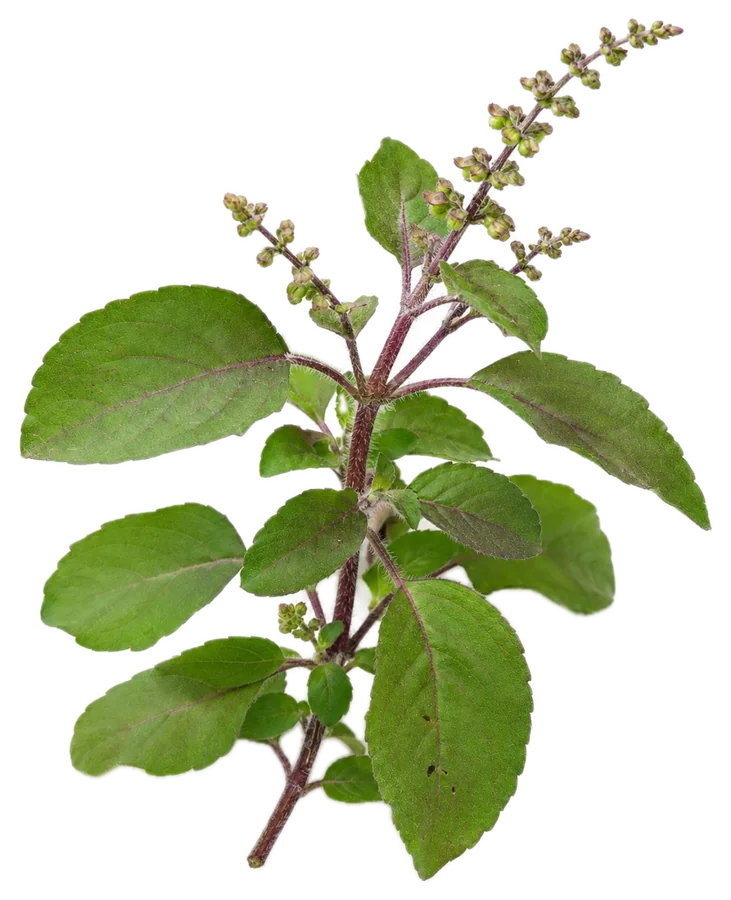
Holy basil leaf extract is an extract of tulsi leaves, a herb revered in Ayurveda, and the EU lists it as a skin-conditioning ingredient
The short version
- Made from the leaves of holy basil, also called tulsi
- Ocimum sanctum and Ocimum tenuiflorum are two names for the same plant
- A different species from sweet basil, Ocimum basilicum
- EU-listed function: skin conditioning
- A cream study combined holy basil and Daucus carota extracts
The good
- The EU lists holy basil leaf extract as a skin-conditioning ingredient.1
The not so good
- The cream study combined holy basil and Daucus carota extracts, leaving holy basil's own contribution unclear.8
- The saved EU entry lists no scientific committee opinion.1
The origin story
Holy basil leaf extract's story starts with tulsi, a herb native to tropical Asia.235
Tulsi has a place in Ayurveda and is sacred to Hindus.235 In 1767, the botanical name Ocimum sanctum was published.67 It's the same plant also called Ocimum tenuiflorum.27 Tulsi also turns up in cosmetic creams.38
What is holy basil leaf extract?
Holy basil leaf extract is an extract of the leaves of Ocimum sanctum,1 better known as tulsi or holy basil.2
The plant is native to Asia,3 and it's revered in Ayurveda.2 The name tulsi comes from Sanskrit and means "incomparable one". No pressure.2
Ocimum sanctum or Ocimum tenuiflorum?
Holy basil's two Latin names, Ocimum sanctum and Ocimum tenuiflorum, are the same plant.
A 2024 review calls it Ocimum tenuiflorum and notes it's also known as O. sanctum.2 The ingredient name keeps the sanctum version.1
It isn't sweet basil, though. That's Ocimum basilicum, which has its own separate ingredient entry.4 Mix-ups happen even with the plant itself: a UK study found commercial tulsi samples hard to verify by DNA, and some home-grown "tulsi" may have been a different Ocimum species.3
What does holy basil do in skincare?
Holy basil leaf extract has one function listed in the EU's cosmetic ingredient inventory: skin conditioning.1
Its global spread has been driven by cultural, cosmetic and medicinal uses.3
What's in holy basil?
A 2024 review of 226 papers names rosmarinic acid, oleanolic acid, luteolin, ursolic acid and limonene among holy basil's active compounds.2
The same review says the plant is known for antioxidant properties thanks to its phenolic compounds.2
That review covers mostly lab and animal work. A 2013 study tested creams combining holy basil and Daucus carota extracts.8 Two formulas showed no redness, oedema or irritation in irritancy tests; the saved abstract doesn't specify the plant part or test subjects.8
Is holy basil leaf extract safe?
The saved CosIng entry for holy basil leaf extract lists no restrictions or scientific committee opinion.1
That entry alone doesn't establish the extract's safety. If a product with it bothers your skin or lips, stop using it and check in with a dermatologist.
Questions people ask
Is tulsi the same as holy basil?
Yes, tulsi and holy basil are the same plant. Tulsi (or Tulasi) is the Hindi and Nepali name, and holy basil is the English one, for Ocimum tenuiflorum.2
Is holy basil's Ocimum sanctum the same as Ocimum tenuiflorum?
Yes, Ocimum sanctum and Ocimum tenuiflorum are two names for the same holy basil plant.2 Cosmetic labels use Ocimum Sanctum Leaf Extract.1
Is holy basil the same as regular basil?
No, holy basil is not the same as regular basil. Regular sweet basil is Ocimum basilicum, a different species with its own ingredient listing.4
What does holy basil do for skin?
Holy basil leaf extract is listed in cosmetics as a skin-conditioning ingredient.1 A 2024 review links the plant's antioxidant properties to its phenolic compounds.2
Find it in
- bakuchiol boosting bundle $68.90
- cocolicious luscious lip mask with bakuchiol $18.90
- cocolicious luscious lip scrub - bakuchiol $15.90
- the scrub & smooch lip care kit with bakuchiol $34.80
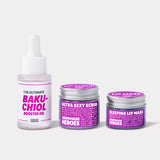
- the ultimate bakuchiol booster oil $38.90
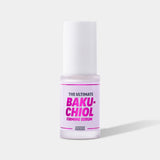
- the ultimate bakuchiol firming serum $34.90
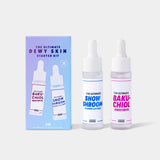
- the ultimate dewy skin starter kit $37.90
- the ultimate snow shroom hyaluronic acid serum $32.90
Related ingredients
Back to the listSources
Show all 8 sources
- European Commission. CosIng cosmetic ingredient database: Ocimum Sanctum Leaf Extract. Open source
- Bhattarai K, Bhattarai R, Pandey RD, Paudel B, Bhattarai HD. A Comprehensive Review of the Phytochemical Constituents and Bioactivities of Ocimum tenuiflorum. The Scientific World Journal. 2024;2024:8895039. Open source
- Bhamra SK, Heinrich M, Johnson MRD, Howard C, Slater A. The Cultural and Commercial Value of Tulsi (Ocimum tenuiflorum L.): Multidisciplinary Approaches Focusing on Species Authentication. Plants. 2022;11(22):3160. Open source
- European Commission. CosIng cosmetic ingredient database: Ocimum Basilicum Flower/Leaf Extract. Open source
- National Parks Board, Singapore. Flora & Fauna Web: Ocimum tenuiflorum L., record 2275. Accessed November 22, 2026. Open source
- National Taiwan University. Taiwan Plants Information Integration Query System: Ocimum sanctum L.; nomenclatural record and Flora of Taiwan, second edition 4:497 (1998). Accessed November 22, 2026. Open source
- USDA Agricultural Research Service. GRIN Taxonomy: Ocimum sanctum L., nomenclature number 25487. Hosted by Australian Pastures Genebank; accessed November 22, 2026. Open source
- Sharma A, Prasar B. Formulation and Evaluation of herbal cosmetic cream to produce multipurpose effect on skin. Research Journal of Topical and Cosmetic Sciences. 2013;4(1):1–4. Open source