


Pentylene glycol
Pentylene Glycol
Pentylene glycol is a small glycol that cosmetics use to condition skin, adjust thickness and help preserve a formula
The short version
- Chemical name 1,2-pentanediol, part of the 1,2-glycol family
- Works as a conditioning and viscosity agent, and also as a preservative
- A US expert panel found it safe as used in 2012
- Described as a weak irritant and weak allergen in a case report
The good
- The US CIR panel found pentylene glycol safe at reviewed cosmetic uses and concentrations.1
- CIR lists pentylene glycol as a cosmetic preservative.1
The not so good
- A case report describes a weak allergen, with a patient reacting in patch tests.4
- A company study compared irritation across related diols; its published summary gives no pentanediol-specific numbers.3
The origin story
Pentylene glycol is the cosmetic name for 1,2-pentanediol, which Adkins and Connor reported making from furfuryl alcohol in a 1931 paper.5678
Their report described copper chromite as the catalyst and a mixture containing both 1,2-pentanediol and 1,5-pentanediol.78 Later, pentylene glycol appeared in cosmetic creams, where it was used as a moisturising ingredient.45
What is pentylene glycol?
Pentylene glycol's chemical name is 1,2-pentanediol, and the Cosmetic Ingredient Review (CIR), a US expert panel, reviews it with a family of 1,2-glycols.2
Back to the listWhat does pentylene glycol do in skincare?
Pentylene glycol has several jobs.
CIR says the 1,2-glycols are used mostly as skin and hair conditioning agents and viscosity agents, and caprylyl glycol and pentylene glycol also work as cosmetic preservatives.1
Is pentylene glycol safe?
CIR's 2012 review concluded that pentylene glycol and the other 1,2-glycols it reviewed are safe in the present practices of use and concentration described.1
The Panel noted that they are absorbed through skin, with modeling predicting less penetration for longer-chain ones, and leaned on negative oral toxicity data for shorter-chain 1,2-glycols and on genotoxicity data.1 A 2018 CIR report lists pentylene glycol as "Safe as used (2012)".2
Does pentylene glycol irritate skin?
Pentylene glycol (1,2-pentanediol) was one of five 1,2-diols compared in a study from a cosmetics company.
Across the group, sensory irritation (the kind people report feeling) went up as the carbon chain got longer, while absorption through lab skin went down.3 The abstract doesn't give pentanediol's own numbers.3
Good to know
A 2021 case report describes pentylene glycol as a weak irritant and a weak allergen, and says few sensitisation cases have been published.4
The authors added a patient who reacted to 5% and 10% in patch tests, while 15 healthy people tested at the same strengths didn't react.4 They call for more studies on its real allergenic potential.4 If a product with it makes you itchy or red, stop using it and check in with a dermatologist.
Questions people ask
What does pentylene glycol do in skincare?
Is pentylene glycol safe?
Is pentylene glycol a preservative?
Pentylene glycol can be a preservative: CIR says caprylyl glycol and pentylene glycol also function as cosmetic preservatives.1
Can pentylene glycol cause an allergic reaction?
Yes, pentylene glycol can cause an allergic reaction. A 2021 case report by Corazza and colleagues calls it a weak allergen and says few sensitisation cases have been published.4 If a product bothers your skin, stop using it and check in with a dermatologist.
Find it in
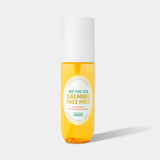
- sip the tea calming face mist $18.90
- let it thrive eyebrow serum $34.90
- let it thrive eyelash serum $34.90
- let it thrive hair tonic $42.90
- sip the tea calming gel mask $34.90
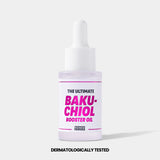
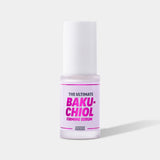
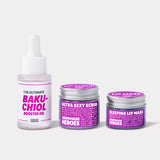
- the ultimate bakuchiol firming serum $34.90
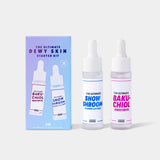
- the ultimate dewy skin starter kit $37.90
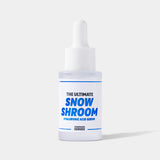
- the ultimate snow shroom hyaluronic acid serum $32.90
Related ingredients
Back to the listSources
Show all 8 sources
- Johnson W Jr, Bergfeld WF, Belsito DV, et al. Safety assessment of 1,2-glycols as used in cosmetics. International Journal of Toxicology. 2012;31(5 Suppl):147S-168S. Open source
- Cosmetic Ingredient Review. Safety Assessment of Alkane Diols as Used in Cosmetics, Final Report. Released June 13, 2018. Open source
- Lee E, An S, Cho SA, et al. The influence of alkane chain length on the skin irritation potential of 1,2-alkanediols. International Journal of Cosmetic Science. 2011;33(5):421-425. Open source
- Corazza M, Schenetti C, Schettini N, Zedde P, Borghi A. Pentylene glycol: An emerging cosmetic allergen? Contact Dermatitis. 2022;86(1). Open source
- Schrader K. Use of alkane diols in cosmetics. European patent application EP0655904A1. Published June 7, 1995. Original assignee: Dragoco Gerberding and Co GmbH. Open source
- Agostini I, Cupferman S. Cosmetic composition comprising an aqueous dispersion of film-forming polymer particles containing 1,2-pentanediol. US patent US6296858B1. Published October 2, 2001. Original assignee: L'Oréal SA. Open source
- Koch O, Köckritz A, Kant M, Martin A, Schöning A, Armbruster U, Bartoszek M, Evert S, Lange B, Bienert R. Method For Producing 1,2-Pentanediol. US patent application US20140066666A1. Published March 6, 2014. Original assignee: Symrise AG. Open source
- Al-Yusufi M. Selective Synthesis of 1,5-Pentanediol from Furfural Derivatives over Stable Nickel-Based Catalysts. Doctoral dissertation, Universität Rostock; submitted 2022, defended 2023. Section 1.3, p. 6; references 61–62, p. 103. doi:10.18453/rosdok_id00004535. Open source