


Candelilla wax
Euphorbia Cerifera (Candelilla) Wax
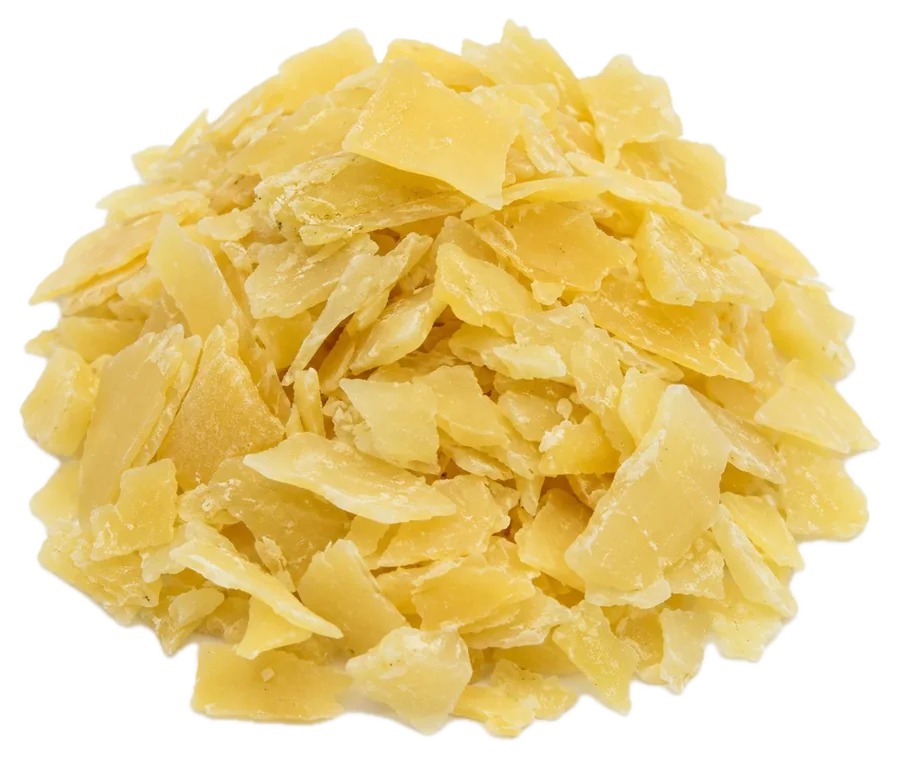
Candelilla wax is a plant wax that cosmetics use to give structure, firmness and gloss
The short version
- A wax from the candelilla plant, Euphorbia antisyphilitica
- About half hydrocarbons, with smaller amounts of esters and free acids
- EU database lists film forming, viscosity controlling and occlusive skin conditioning among its functions
- A US expert panel concluded in 1984 that it's safe for cosmetic use
The good
- The US CIR panel judged candelilla wax safe for cosmetic use in 1984.3
- The EU cosmetic database lists film forming, emulsion stabilising and viscosity controlling among its functions.1
The not so good
- CIR was established by the cosmetics industry trade group, with FDA and consumer-group support.5
The origin story
Candelilla wax comes from the wax coating on the stems of the candelilla plant, which grows in Mexico, New Mexico and Texas.678
Zuccarini described the plant in 1832.68 By the early 1900s, people were selling its wax.67 In 1911, Benjamin Young Sharp filed a patent application for a method of extracting candelilla wax.910 By 1967, candelilla wax was an ingredient in cosmetics.711
What is candelilla wax?
Candelilla wax is a wax from a plant.
The EU's CosIng database describes it as a wax obtained from Euphorbia cerifera, and says the accepted scientific name for that plant is Euphorbia antisyphilitica.1
US food regulations, which also list it, describe a hard, yellowish-brown wax collected by boiling the plants in water with sulfuric acid.2 About half of it is hydrocarbons, with smaller amounts of esters and free acids.2
What does candelilla wax do in a formula?
Candelilla wax adds body to a formula, like waxes in general.3
The Cosmetic Ingredient Review (CIR), a US expert panel, says waxes in general lend structure, firmness, gloss and smoothness to cosmetics, and form creamy emulsions.3
CosIng lists these functions for it: astringent, emulsion stabilising, film forming, fragrance, viscosity controlling, and skin conditioning (miscellaneous and occlusive).1 The same entry shows no cosmetics regulation restrictions.1
Is candelilla wax safe?
Candelilla wax was reviewed by CIR in 1984 together with carnauba, Japan wax and beeswax.
Based on animal and clinical test data, it concluded they are safe for cosmetic use.3
CIR reaffirmed the 1984 safety conclusion in a re-review published in 2005.4 In 2025, the panel reviewed updated use and safety data and reaffirmed that conclusion without reopening the assessment.4
Worth knowing: CIR was set up in 1976 by the Personal Care Products Council, the cosmetics industry trade group, with support from the FDA and the Consumer Federation of America.5
Questions people ask
What is candelilla wax made from?
Candelilla wax is a wax obtained from Euphorbia cerifera, whose accepted scientific name is Euphorbia antisyphilitica.1
Is candelilla wax safe in cosmetics?
A US expert panel concluded in 1984, from animal and clinical test data, that candelilla wax and three other waxes are safe for cosmetic use.3
What does candelilla wax do in a product?
Candelilla wax is a wax, and CIR says waxes lend structure, firmness, gloss and smoothness to cosmetics.3 CosIng lists film forming and viscosity controlling among its functions.1
Find it in
- bakuchiol boosting bundle $68.90
- tinted lip butter (soft pink) $17.90
- cocolicious luscious lip mask $17.90
- cocolicious luscious lip mask with bakuchiol $18.90
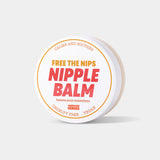
- free the nips nipple balm $17.90
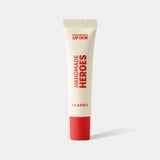
- hyaluronic lip dew - classic $14.90
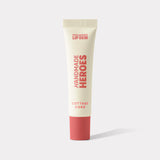
- hyaluronic lip dew - cottage core $14.90
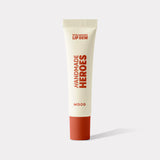
- hyaluronic lip dew - mood $14.90
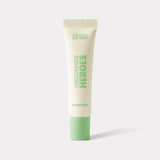
- hyaluronic lip dew - spirited $14.90
- the scrub & smooch lip care kit $30.80
- the scrub & smooch lip care kit with bakuchiol $34.80
Related ingredients
Back to the listSources
Show all 11 sources
- European Commission. CosIng cosmetic ingredient database: Euphorbia Cerifera Wax (ID 100298). Open source
- US Code of Federal Regulations. 21 CFR 184.1976: Candelilla wax. Open source
- Cosmetic Ingredient Review Expert Panel. Final Report on the Safety Assessment of Candelilla Wax, Carnauba Wax, Japan Wax, and Beeswax. Journal of the American College of Toxicology. 1984;3(3):1-41. Open source
- Cosmetic Ingredient Review. CIR Infobase ingredient status report: Euphorbia Cerifera (Candelilla) Wax. Open source
- Boyer IJ, Bergfeld WF, Heldreth B, Fiume MM, Gill LJ. The Cosmetic Ingredient Review Program-Expert Safety Assessments of Cosmetic Ingredients in an Open Forum. International Journal of Toxicology. 2017;36(5_suppl2):5S-13S. Open source
- Rojas Molina R, Saucedo Pompa S, De León Zapata MA, Jasso Cantú D, Aguilar CN. Pasado, presente y futuro de la candelilla. Revista Mexicana de Ciencias Forestales. 2011;2(6):7–18. Open source
- United States Tariff Commission. Summaries of Trade and Tariff Information: Schedule 4, Volume 12, Fatty Substances, Waxes, and Miscellaneous Chemical Products. TC Publication 239. 1968. Candelilla Wax, pp. 137–140; section dated October 1967. Open source
- USDA Agricultural Research Service; Agriculture and Agri-Food Canada. Euphorbia antisyphilitica Zucc., nomen number 16345. GRIN-Global-CA taxonomic record; verified February 27, 2012; includes subsequent nomenclatural comment dated December 31, 2013. Open source
- Sharp BY. Process of extracting wax from the candelilla-plant. US Patent 1,018,589. Filed October 30, 1911; published February 27, 1912. Original specification and metadata hosted by Google Patents. Open source
- University of North Texas Libraries. Catalog record for Benjamin Young Sharp, Process of Extracting Wax from the Candelilla Plant. Application October 30, 1911; patent 1,018,589, accepted February 27, 1912. The Portal to Texas History, UNT Libraries Government Documents Department. Open source
- Wick WJ. Three-phase lipstick composition. US Patent 2,873,229. Filed July 15, 1954; published February 10, 1959. Original specification and metadata hosted by Google Patents. Open source