


Cocoa butter
Theobroma Cacao (Cocoa) Seed Butter
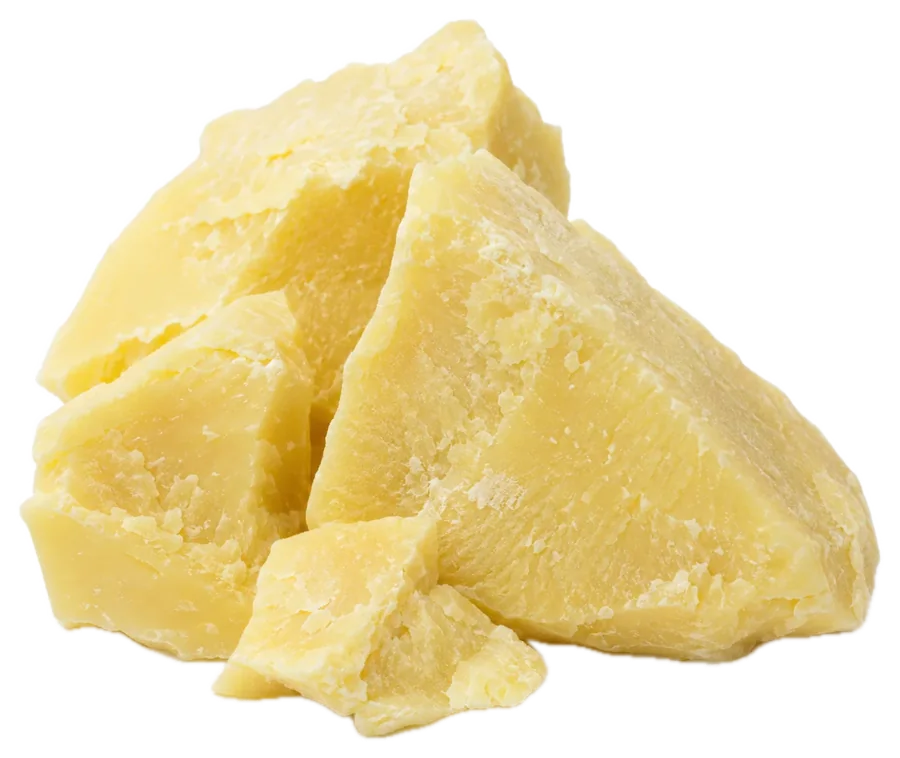
Cocoa butter is the yellowish white solid fat from roasted cocoa seeds, which the EU lists as an emollient
The short version
- A yellowish white solid from roasted cocoa seeds
- EU-listed jobs include emollient and skin protecting
- Two placebo-controlled trials found no clear effect on pregnancy stretch marks
- A 2015 review called it not effective for preventing stretch marks
The good
- The US CIR panel found cocoa butter safe within current cosmetic uses and concentrations.2
- The EU lists it as an emollient, skin conditioner and skin protectant.1
The not so good
- Two placebo-controlled pregnancy trials found no significant difference in stretch marks.34
The origin story
Cocoa butter is extracted from the seeds of the cacao tree.67
By 1730, cocoa butter was being recommended as a pomatum for dry, rough skin.89 In 1828, Van Houten introduced a method for pressing butter out of cacao.910 The press left a cake that could be turned into cocoa powder.710
What is cocoa butter?
Cocoa butter is the fat from cocoa seeds.
The EU's cosmetic ingredient database describes it as a yellowish white solid made from the roasted seeds of the cocoa tree, Theobroma cacao.1
What does cocoa butter do?
Officially, cocoa butter is an emollient (a softener), a skin conditioner, a skin protectant and a fragrance ingredient.
That's the EU's list.1 The US Cosmetic Ingredient Review says plant oils in general are used for their skin conditioning, occlusive, emollient and moisturising properties.2
The same EU entry shows no restriction on it in cosmetics.1
What the research says
A 2015 review of stretch-mark prevention put it bluntly: cocoa butter and olive oil aren't effective for preventing them or reducing their severity.5
Cocoa butter lotion and stretch marksBJOG, 2008
Multicentre randomised, double-blind, placebo-controlled trial · 210 pregnant women with no previous births enrolled, 175 completed · daily lotion from the first trimester to delivery
Stretch marks showed up in 45.1% of the cocoa butter group and 48.8% of the placebo group, with no difference in how often they appeared or how severe they were.
Limits The cocoa butter percentage isn't given in the abstract, 35 of the 210 women didn't finish, and it only looked at stretch marks.
Cocoa butter cream and stretch marksInternational Journal of Gynecology & Obstetrics, 2010
Randomised, double-blind, placebo-controlled trial · 300 pregnant women · cream from 16 weeks to delivery
Stretch marks developed in 44% with cocoa butter and 55% with placebo, a gap that wasn't statistically significant.
Limits One population of Afro-Caribbean women, the abstract doesn't give the cocoa butter percentage, and it only looked at stretch marks.
Is cocoa butter safe?
The 2017 Cosmetic Ingredient Review Expert Panel's verdict on cocoa butter: safe in the present practices of use and concentration.2
Listed as cocoa seed butter, it's named on the panel's list of ingredients found safe among 244 plant-derived fatty acid oils.2
If your lips or skin react, stop using it and check in with a dermatologist.
Questions people ask
Does cocoa butter help with stretch marks?
Cocoa butter showed no significant difference in stretch marks in two placebo-controlled trials in pregnant women: one where 175 women completed the study3 and one with 300 women.4 A 2015 review concluded it isn't effective for preventing them.5
Is cocoa butter good for your lips?
Cocoa butter is listed by the EU as an emollient and skin protectant.1
What is cocoa butter?
Cocoa butter is a yellowish white solid fat from the roasted seeds of the cocoa tree.1
Is cocoa butter safe for skin?
Cocoa butter is covered by a US expert panel's conclusion that 244 plant-derived fatty acid oils, assessed as a group, are safe as used in cosmetics.2
Find it in
- bakuchiol boosting bundle $68.90
- tinted lip butter (soft pink) $17.90
- cocolicious luscious lip mask $17.90
- cocolicious luscious lip mask with bakuchiol $18.90
- free the nips nipple balm $17.90
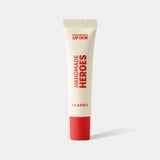
- hyaluronic lip dew - classic $14.90
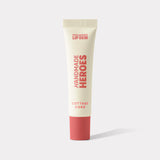
- hyaluronic lip dew - cottage core $14.90
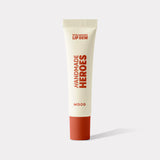
- hyaluronic lip dew - mood $14.90
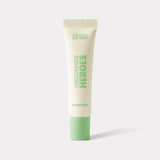
- hyaluronic lip dew - spirited $14.90
- no-no-funk natural deodorant in vanilla coconut $12.90
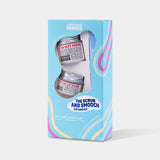
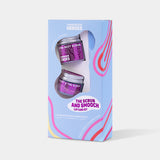
- the scrub & smooch lip care kit $30.80
- the scrub & smooch lip care kit with bakuchiol $34.80
Related ingredients
Back to the listSources
Show all 10 sources
- European Commission. CosIng cosmetic ingredient database: Theobroma Cacao Seed Butter. Open source
- Burnett CL, Fiume MM, Bergfeld WF, Belsito DV, Hill RA, Klaassen CD, Liebler D, Marks JG Jr, Shank RC, Slaga TJ, Snyder PW, Andersen FA. Safety Assessment of Plant-Derived Fatty Acid Oils. International Journal of Toxicology. 2017;36(3 Suppl):51S–129S. Open source
- Osman H, Usta IM, Rubeiz N, Abu-Rustum R, Charara I, Nassar AH. Cocoa butter lotion for prevention of striae gravidarum: a double-blind, randomised and placebo-controlled trial. BJOG. 2008;115(9):1138–1142. Open source
- Buchanan K, Fletcher HM, Reid M. Prevention of striae gravidarum with cocoa butter cream. International Journal of Gynecology & Obstetrics. 2010;108(1):65–68. Open source
- Korgavkar K, Wang F. Stretch marks during pregnancy: a review of topical prevention. British Journal of Dermatology. 2015;172(3):606–615. Open source
- Flückiger FA, Hanbury D. Pharmacographia: A History of the Principal Drugs of Vegetable Origin, Met With in Great Britain and British India. 2nd ed. London: Macmillan; 1879, pp. 95–97, Oleum Cacao. Digitized period text. Open source
- Poelmans E, Swinnen J. A Brief Economic History of Chocolate. In: Squicciarini MP, Swinnen J, eds. The Economics of Chocolate. Oxford: Oxford University Press; 2016, chapter 2, pp. 11–42. Public publisher preview. Open source
- Quélus D de. The Natural History of Chocolate. Translated by R. Brookes. 2nd ed. London: J. Roberts; 1730, pp. 74–77. John Carter Brown Library copy, Internet Archive OCR. Open source
- Knapp AW. Cocoa and Chocolate: Their History from Plantation to Consumer. London: Chapman and Hall; 1920, pp. 15, 157–159. University of California Libraries copy, Internet Archive OCR. Open source
- Cornell University Library. Coenraad Van Houten. Chocolate: Food of the Gods, online exhibition. Undated; accessed November 22, 2026. Open source