



Charcoal powder
Charcoal Powder
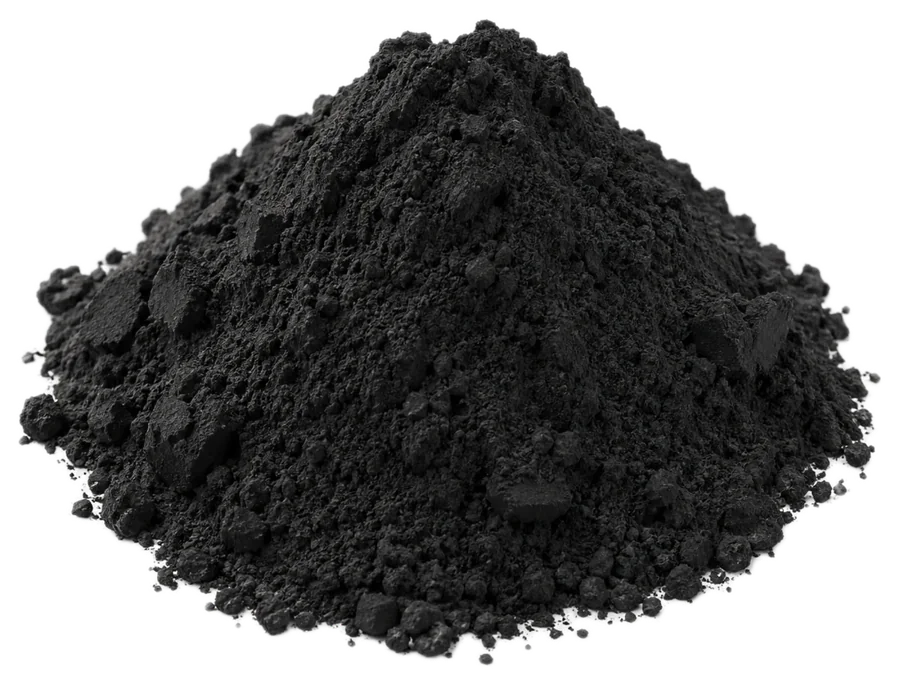
Charcoal powder is finely ground activated charcoal, a black carbon material made to be absorbent, and carbon is listed as a cosmetic colourant
The short version
- Activated carbon: a black material with a large surface area
- PubChem lists carbon as a cosmetic colourant
- A 2020 dermatology review calls it generally safe
- The same review found no evidence for exfoliating or anti-ageing claims
- A CIR panel reviewed plant-derived charcoal powder, excluding colourant use
The good
- A dermatology review describes activated charcoal as generally safe to use.2
- PubChem lists carbon as a cosmetic colourant.1
The not so good
- The dermatology review found no evidence for exfoliating or anti-ageing abilities.2
- The colourant listing covers carbon generally, rather than this exact ingredient name.1
The origin story
Charcoal powder for cosmetics comes from plant material that's heated into charcoal.34
Charcoal was used in ancient Egypt.56 In 1773, Scheele used charcoal to adsorb gases.56 The activated form is processed to develop pores and increase its surface area.46 Much later, activated charcoal found its way into skin cleansers and soaps.23
What is charcoal powder?
Charcoal powder is finely ground activated charcoal, also called activated carbon.
That's carbon made by burning organic matter incompletely and then activating it with a hot, oxidising gas.1 The result is a material with a huge surface area that sticks to lots of other substances.1 PubChem describes it as black grains treated to improve absorptive ability.1
What does charcoal powder do in a cosmetic?
Charcoal powder has several reported cosmetic roles, including absorbent, abrasive and opacifying agent.3
PubChem lists carbon as a cosmetic colourant.1
One catch: that listing is for carbon in general, not for this exact label name.1
What do sources say about charcoal in beauty products?
A 2020 review in Clinics in Dermatology notes that activated charcoal has become popular in cosmetics, including facial cleansers and soaps.2
It adds that clinical evidence does not support the claims companies make for charcoal products.2
The review's advice is that using activated charcoal is generally safe, but there's no evidence for exfoliating or anti-ageing abilities.2
Good to know
A CIR panel considered plant-derived charcoal powder safe at the cosmetic uses and concentrations reviewed.3
Colourant use was outside its scope.3 If a product irritates your skin or scalp, stop using it and check in with a dermatologist.
Questions people ask
Is charcoal powder safe?
Charcoal powder, as activated charcoal, is generally safe to use, according to a 2020 dermatology review.2 A CIR panel considered plant-derived charcoal powder safe at the cosmetic uses and concentrations reviewed.3 Colourant use was outside its scope.3
Does activated charcoal do anything for skin?
Activated charcoal has a lack of evidence for exfoliating or anti-ageing abilities, according to a 2020 dermatology review, which also says clinical evidence does not support companies' claims for charcoal products.2
Why is charcoal powder used in cosmetics?
Charcoal powder is black, and PubChem lists carbon as a cosmetic colourant.1 Activated charcoal is also treated to improve how well it absorbs.1
Find it in
Back to the listRelated ingredients
Back to the listSources
Show all 6 sources
- National Center for Biotechnology Information. PubChem Compound Summary for CID 5462310, Carbon (activated charcoal). National Library of Medicine, accessed 2026-11-22. Open source
- Sanchez N, Fayne R, Burroway B. Charcoal: An ancient material with a new face. Clinics in Dermatology. 2020;38(2):262-264. Open source
- Burnett CL; Cosmetic Ingredient Review, Expert Panel for Cosmetic Ingredient Safety. Safety Assessment of Plant-Derived Charcoal Ingredients as Used in Cosmetics. Final report. Last panel review December 4–5, 2023; released January 8, 2024. Open source
- Schwarcz J. Charcoal is one of the most important substances ever discovered. McGill University, Office for Science and Society. March 20, 2017. Open source
- Marketos SG, Androutsos G. Charcoal: from antiquity to artificial kidney. Journal of Nephrology. 2004;17(3):453–456. PMID: 15365971. Abstract retrieved through Europe PMC. Open source
- Çeçen F. Water and Wastewater Treatment: Historical Perspective of Activated Carbon Adsorption and its Integration with Biological Processes. In: Çeçen F, Aktaş Ö. Activated Carbon for Water and Wastewater Treatment: Integration of Adsorption and Biological Treatment. Wiley-VCH; 2011. Chapter 1, pp. 1–11. Open source