


Rice powder
Oryza Sativa (Rice) Powder
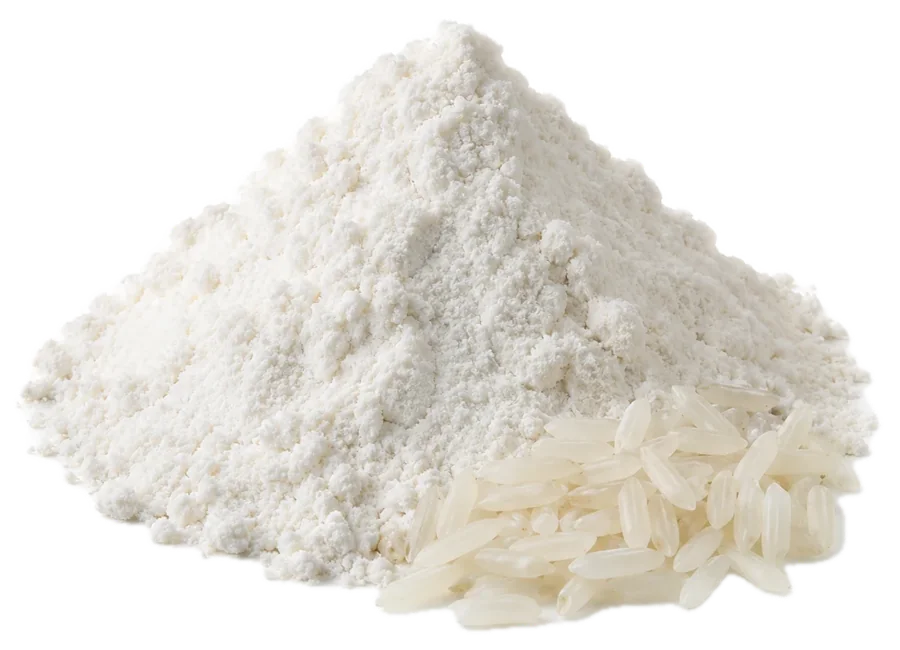
Rice powder, going by its label name, is a powder from rice; the related ingredient rice starch is an absorbent and bulking agent in cosmetics
The short version
- A rice ingredient, from the plant Oryza sativa
- A 2006 CIR review of rice ingredients found them safe as used
- In that review, rice starch is an absorbent and bulking agent
- Isolated cases of allergy to raw rice have been reported
- The 2006 review abstract names rice starch, rice germ powder and rice bran
The good
- A laboratory face-powder study reported oil-absorbing potential for related rice starch.2
The not so good
- The cited safety review abstract names related rice ingredients rather than this exact label.1
- The cited abstracts describe face powders and body bars.23
- CIR reports isolated allergy cases involving raw rice, which is related evidence rather than powder-specific testing.1
The origin story
Rice powder was already a cosmetic name by 1845, including the French poudre de riz.467
By 1879, Bourjois was making a face powder called Poudre de Riz Java.48 By 1915, other face cosmetics were being sold as rice powder, too.45 Rice starch was one material used to make face powders.24
What is rice powder?
Rice powder, labelled Oryza Sativa (Rice) Powder, comes from rice, going by its label name.
The cited safety review abstract names rice starch, rice germ powder and rice bran, rather than this exact label.1
What does rice powder do in a powder product?
Rice starch, a related rice ingredient, is described by the Cosmetic Ingredient Review (CIR) as an absorbent and bulking agent.1
It was used in 51 formulations across a wide range of product categories at the time of the review.1
Lab studies point the same way. In a 2020 lab study, rice starch was swapped in for talc in loose face powders, and the authors described it as having excellent oil absorption capacity and concluded it could work in face powders.2 A 2025 lab study of body bars found that starches (rice was one of five tested) with low moisture and high oil absorption capacity reduced the greasy skin feel.3 The cited abstracts describe face powders and body bars.23
Is rice powder safe?
The related rice-derived ingredients in the CIR panel's 2006 report are safe as used, the panel concluded.1
That is in the practices of use and concentrations it described.1 It also said current levels of PCBs and heavy metals in these ingredients aren't a safety concern, and that pesticides and heavy metals should not rise above currently reported levels.1
On allergy, the CIR panel wrote: "Isolated cases of allergy to raw rice have been reported, but rice, in general, is considered non allergenic."1
Questions people ask
Is rice powder safe in cosmetics?
Rice-derived cosmetic ingredients, including rice starch, are safe as used, the CIR Expert Panel concluded in 2006.1 The abstract names related ingredients rather than this exact label.1
Does rice powder absorb oil?
Rice starch, a related rice ingredient, is listed by CIR as an absorbent.1 A 2020 lab study used rice starch in face powders, with the authors citing its oil absorption capacity.2
Can you be allergic to rice powder?
For rice powder, the related evidence is on rice: isolated cases of allergy to raw rice have been reported, but the CIR panel says rice in general is considered non allergenic.1
Find it in
Back to the listRelated ingredients
Back to the listSources
Show all 8 sources
- Cosmetic Ingredient Review Expert Panel. Amended final report on the safety assessment of Oryza Sativa (rice) Bran Oil, Oryza Sativa (rice) Germ Oil, Rice Bran Acid, Oryza Sativa (rice) Bran Wax, Hydrogenated Rice Bran Wax, Oryza Sativa (rice) Bran Extract, Oryza Sativa (rice) Extract, Oryza Sativa (rice) Germ Powder, Oryza Sativa (rice) Starch, Oryza Sativa (rice) Bran, Hydrolyzed Rice Bran Extract, Hydrolyzed Rice Bran Protein, Hydrolyzed Rice Extract, and Hydrolyzed Rice Protein. International Journal of Toxicology. 2006;25(Suppl 2):91-120. Open source
- Siriwarin A, Chidchai P, Maneenuan D, Kaewnopparat N, Songkro S. RiceSorb as Talcum Substitute for Loose Face Powders: Formulation and Characterization. Journal of Cosmetic Science. 2020;71(5):291-302. Open source
- Kulawik-Pioro A, Fryzlewicz-Kozak B, Tworzydlo I, Kruk J, Ptaszek A. The Impact of Starches from Various Botanical Origins on the Functional and Mechanical Properties of Anhydrous Lotion Body Bars. Polymers (Basel). 2025;17(13):1731. Open source
- Sant’Anna, Mara Rúbia. From perfumes to powders: advertising as a historical object. Revista Brasileira de História. 2012;32(64):283–308 (English translation). doi:10.1590/S0102-01882012000200016. Open source
- Wilbert, Martin I. Cosmetics as drugs: a review of some of the reported harmful effects of the ordinary constituents of widely used cosmetics. Public Health Reports. 1915;30(42):3059–3066. October 15, 1915; rice-powder discussion on p.3066. United States Public Health Service; digitized by CDC Stacks. Open source
- ATILF (CNRS / Université de Lorraine). POUDRE: Étymologie. Trésor de la langue française, via Centre National de Ressources Textuelles et Lexicales. Accessed November 22, 2026. Open source
- The Toilet of Flora; or, A Collection of the Most Simple and Approved Methods of Preparing Baths, Essences, Pomatums, Powders, Perfumes, and Sweet-Scented Waters. New edition, improved. London: J. Murray and W. Nicoll; 1779. Recipe 6, p.5. Period text attributed to Pierre-Joseph Buc’hoz; digitized Wellcome Library copy, hosted by World Herb Library. Open source
- Grant, Joseph Karl. The Graying of the American Manufacturing Economy: Gray Markets, Parallel Importation, and a Tort Law Approach. Oregon Law Review. 2009;88:1139–1190, especially p.1150 and notes 46–55. University of Oregon Scholars’ Bank copy. Open source