


Iron oxides (CI 77491, CI 77492, CI 77499)
CI 77491, CI 77492, CI 77499
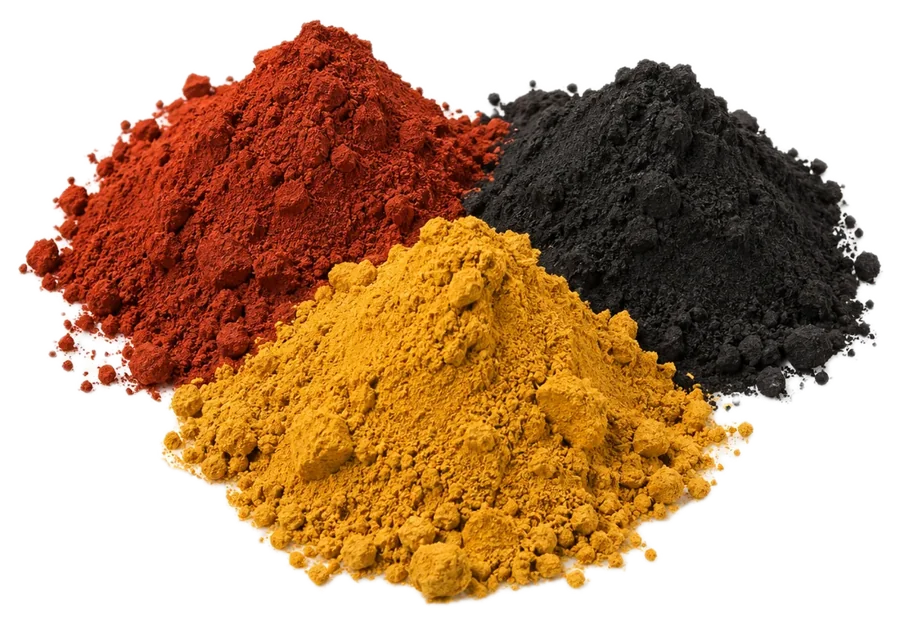
Iron oxides are iron-and-oxygen pigments that cosmetics use as colourants, listed as CI 77491 (red), CI 77492 (yellow) and CI 77499 (black)
The short version
- Three CI numbers: 77491 is red, 77492 is yellow, 77499 is black
- FDA lists them for cosmetics generally, including the eye area
- The FDA entry is for synthetically prepared iron oxides
- FDA caps lead at 10 ppm and arsenic and mercury at 3 ppm each
- All three are on the EU's list of allowed colourants
The good
- The FDA permits cosmetic colouring, including around the eyes, in amounts consistent with good manufacturing practice.1
- The EU lists red, yellow and black iron oxides as allowed cosmetic colourants.2
The not so good
- The safety information here comes from the FDA's cosmetic colourant rule.1
- FDA specifications require impurity limits for arsenic, lead and mercury.1
The origin story
Iron oxides have a history as pigments from naturally occurring mineral earths such as red ochre, which contains iron oxide.34
Prehistoric people used earth pigments to make cave paintings before written records.35 In ancient Egypt, ochre was also used in lip and cheek makeup, with red ochre applied to both as rouge.67
What are iron oxides?
Iron oxides are iron-and-oxygen pigments.
In US rules, the colour additive "iron oxides" means synthetically prepared iron oxides, including the hydrated forms, with no other substances mixed in.1
The CI part is the Color Index number, the label for each colourant. The EU's colourant list gives 77491 as Iron Oxide Red, 77492 as Iron Oxide Yellow and 77499 as Iron Oxide Black.2
Where can iron oxides be used?
The FDA lists iron oxides for colouring cosmetics, including around the eyes, within good manufacturing practice. In Singapore, the ASEAN colourant list allows CI 77491, CI 77492 and CI 77499 in all cosmetic products.81
There's no use-area carve-out in that entry, and no percentage cap.1
The FDA doesn't make batches go through its certification programme for this colour.1
In the EU, all three CI numbers are on Annex IV of the Cosmetics Regulation, the list of allowed colourants. In the text as first published in 2009, none of the three carries a product-type restriction.2
What about impurities?
The FDA entry for iron oxides sets maximums for arsenic, lead and mercury.1
The limits are arsenic 3 parts per million, lead 10 parts per million and mercury 3 parts per million, all measured as is.1
Good to know
The safety information for iron oxides here comes from the FDA's cosmetic colourant rule.1
Back to the listQuestions people ask
Are iron oxides allowed in lip products?
The FDA lists iron oxides for colouring cosmetics generally, including the eye area, and doesn't carve out the lips. In Singapore, the ASEAN colourant list allows all three in all cosmetic products, lips included.81
What do CI 77491, CI 77492 and CI 77499 mean?
Are iron oxides allowed in the EU?
Find it in
- tinted lip butter (soft pink) $17.90
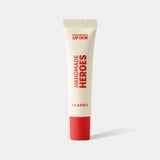
- hyaluronic lip dew - classic $14.90
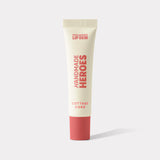
- hyaluronic lip dew - cottage core $14.90
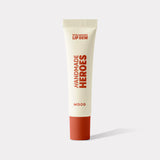
- hyaluronic lip dew - mood $14.90
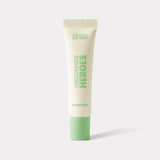
- hyaluronic lip dew - spirited $14.90
- mother of all lip oil - caramel chestnut $16.90
- mother of all lip oil - moonshine $16.90
- mother of all lip oil - ripe cherry $16.90
- mother of all lip oil - sugar peach $16.90
- mother of all lip oil - sweet beet $16.90
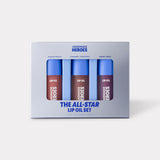
- the all-star lip oil set $45.00
Related ingredients
Back to the listSources
Show all 8 sources
- US Code of Federal Regulations. 21 CFR 73.2250: Iron oxides. eCFR, current text. Open source
- European Union. Regulation (EC) No 1223/2009 of the European Parliament and of the Council of 30 November 2009 on cosmetic products, Annex IV (list of colorants allowed in cosmetic products), as published in the Official Journal. EUR-Lex. Open source
- Jones, Thomas S. Iron Oxide Pigments (In Two Parts): 1. Fine-Particle Iron Oxides for Pigment, Electronic, and Chemical Use. US Department of the Interior, Bureau of Mines, Information Circular 8771, 1978, pp. 1–58. Open source
- North Carolina Museum of Art. Red Ochre. NCMALearn, undated museum education resource, accessed November 22, 2026. Open source
- Hunger, Klaus, and Martin U. Schmidt. Industrial Organic Pigments: Production, Crystal Structures, Properties, Applications. Fourth edition. Wiley-VCH, 2018. Chapter 1, section 1.2, Historical, p. 3. Open source
- Quick, L. Decorated Women: A Sociological Approach to the Function of Cosmetics in the Books of Esther and Ruth. Biblical Interpretation 27(3), 2019, pp. 354–371. doi:10.1163/15685152-00273P03. Accepted manuscript in Oxford University Research Archive, p. 4. Open source
- Rosicrucian Egyptian Museum. Cosmetics Workshop. Undated museum education page, accessed November 22, 2026. Open source
- ASEAN Cosmetic Directive, Annexes II to VII. Version 2026-1, 22 June 2026. Published in Singapore by the Health Sciences Authority. Open source