


Titanium dioxide
Titanium Dioxide

Titanium dioxide is a white pigment listed as a cosmetic colourant in US and EU rules
The short version
- Listed as a white colourant, CI 77891 in the EU
- FDA lists it for cosmetics, including cosmetics for the eye area
- In 2021 EFSA judged the food additive E171 no longer safe: a food ruling
- EU colourant list: entry 143, white
The good
- The FDA permits its cosmetic pigment use, including around eyes, in amounts consistent with good manufacturing practice.1
- The EU lists titanium dioxide as an allowed white cosmetic colourant.2
The not so good
- EU SCCS could not exclude genotoxicity potential for almost all grades used in oral products.4
- The SCCS details here come from the Commission's summary page rather than the full opinion.4
The origin story
Titanium dioxide occurs naturally as rutile, one of its mineral forms.56
In 1791, William Gregor identified the element titanium in a mineral.567 Four years later, Martin Heinrich Klaproth studied rutile, recognised an unknown element and gave it the name titanium.67 By 1940, titanium dioxide was turning up in makeup formulas.89
What is titanium dioxide?
Titanium dioxide is TiO2, a white pigment.
The EU colourant list gives it as CI 77891, colour white.2
This page covers it as a pigment only.
Where is titanium dioxide allowed in cosmetics?
The FDA lists titanium dioxide for cosmetics, including around the eyes, within good manufacturing practice. In Singapore, the ASEAN colourant list allows it in all cosmetic products, with extra rules for fine powders you could breathe in.101
In the EU, titanium dioxide is entry 143 on Annex IV of the Cosmetics Regulation, the list of allowed colourants, as first published in 2009.2
What was the EU food decision about?
In May 2021 EFSA, the EU's food safety agency, assessed titanium dioxide as a food additive, E171.
It concluded that a concern for genotoxicity could not be ruled out and that E171 can no longer be considered safe when used as a food additive.3 That's a food ruling about swallowing it, not a finding about cosmetics.3
For cosmetics, the EU's scientific committee (SCCS) said in 2024 that the available evidence is not sufficient to exclude the genotoxicity potential of almost all titanium dioxide grades used in oral products. Two nano grades were the exception.4 Its page also says its earlier opinions on dermal use stay unchanged for the grades they covered.4
Good to know
The 2024 SCCS details on titanium dioxide above come from the Commission's summary page for the opinion, not the full document.4
Check the opinion itself for the fine print.
Questions people ask
Is titanium dioxide banned in the EU?
Titanium dioxide as a food additive (E171) is no longer considered safe, per EFSA's 2021 opinion.3 As a cosmetic colourant, it's entry 143 on the EU's allowed-colourant list as first published in 2009.2
What does CI 77891 mean for titanium dioxide?
CI 77891 is the Color Index number for titanium dioxide, listed in the EU colourant annex with the colour white.2
Is titanium dioxide allowed in lip and eye products?
Titanium dioxide may be used in cosmetics, including cosmetics for the eye area, within good manufacturing practice, says the FDA entry. In Singapore, the ASEAN colourant list allows it in all cosmetic products, lips and eyes included, with extra rules for fine powders.101
Find it in
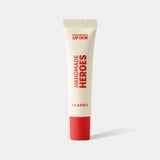
- hyaluronic lip dew - classic $14.90
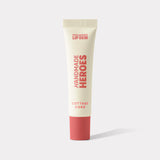
- hyaluronic lip dew - cottage core $14.90
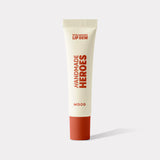
- hyaluronic lip dew - mood $14.90
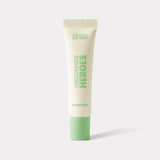
- hyaluronic lip dew - spirited $14.90
- mother of all lip oil - caramel chestnut $16.90
- mother of all lip oil - moonshine $16.90
- mother of all lip oil - ripe cherry $16.90
- mother of all lip oil - sugar peach $16.90
- mother of all lip oil - sweet beet $16.90
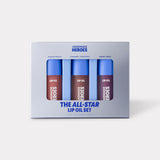
- the all-star lip oil set $45.00
Related ingredients
Back to the listSources
Show all 10 sources
- US Code of Federal Regulations. 21 CFR 73.2575: Titanium dioxide (with identity and specifications from 21 CFR 73.575(a)(1) and (b)). eCFR, current text. Open source
- European Union. Regulation (EC) No 1223/2009 of the European Parliament and of the Council of 30 November 2009 on cosmetic products, Annex IV (list of colorants allowed in cosmetic products), as published in the Official Journal. EUR-Lex. Open source
- EFSA Panel on Food Additives and Flavourings (FAF); Younes M, et al. Safety assessment of titanium dioxide (E171) as a food additive. EFSA Journal. 2021;19(5):e06585. Open source
- Scientific Committee on Consumer Safety. Scientific advice on Titanium dioxide (TiO2), SCCS/1661/23, final opinion adopted 13 May 2024. European Commission, publication page. Open source
- Palamara E, Das PP, Nicolopoulos S, Tormo Cifuentes L, Kouloumpi E, Terlixi A, Zacharias N. Towards building a Cathodoluminescence (CL) database for pigments: characterization of white pigments. Heritage Science. 2021;9:100. doi:10.1186/s40494-021-00575-4. Historical background within a research article. Open source
- Royal Society of Chemistry. Titanium: element information, properties and uses. Periodic Table; history text credited to John Emsley, 2012. Accessed 22 November 2026. Open source
- Miśkowiec P. Name game: the naming history of the chemical elements—part 1—from antiquity till the end of 18th century. Foundations of Chemistry. 2023;25:29–51. Published online 1 November 2022. doi:10.1007/s10698-022-09448-5. Open source
- Quaedvlieg M. Manufacture of a basis for face powder. US patent US2218586A. Assigned to Winthrop Chemical Company, Inc. Published 22 October 1940. Open source
- Factor F, Fisher PE. Dry make-up cosmetic in solid cake form. US patent US2101843A. Assigned to Max Factor & Co. Published 14 December 1937. Open source
- ASEAN Cosmetic Directive, Annexes II to VII. Version 2026-1, 22 June 2026. Published in Singapore by the Health Sciences Authority. Open source