


Sunflower seed oil
Helianthus Annuus (Sunflower) Seed Oil
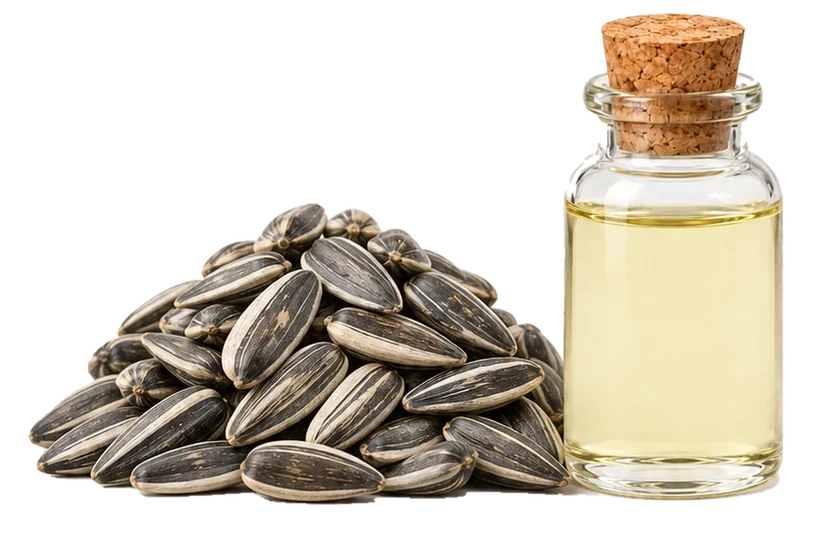
Sunflower seed oil is an oil from sunflower seeds, rich in linoleic acid, that cosmetics use for skin conditioning
The short version
- Pressed from the seeds of the sunflower, Helianthus annuus
- Roughly 55% linoleic acid and 30% oleic acid
- Small trial: preserved the outer skin layer's integrity and improved hydration over four weeks
- A US expert panel found plant oils like it safe as used
The good
- In a randomised 12-person forearm study, sunflower oil preserved the outer skin layer and improved hydration.4
- CIR found sunflower seed oil safe as used in cosmetics within its plant-oil review.1
The not so good
- The adult forearm study was tiny and lasted four weeks.4
- A baby-skincare review found sunflower oil on dry infant skin may adversely affect barrier function.6
The origin story
Sunflower seed oil comes from the seeds of a plant that originated in North America.278
Native Americans used sunflower for oil before the plant reached Europe.89 Sunflowers arrived in Europe in the 1500s, where they were grown as garden plants.89 Commercial cultivation for oil followed in nineteenth-century Russia.89 Russian breeders then selected plants with more oil in their seeds.789
What is sunflower seed oil?
Sunflower seed oil is the oil from the seeds of the sunflower, Helianthus annuus.2
On labels it's Helianthus Annuus (Sunflower) Seed Oil, which the FDA's substance registry files under plain sunflower oil.5
A 2022 review lists it at about 55% linoleic acid, 30% oleic acid and 6% palmitic acid, with fatty acid levels that can shift 5 to 10% depending on where the plants grew.3 That makes it much higher in linoleic acid than olive oil.2
What does sunflower seed oil do for skin?
Sunflower seed oil is one of the plant oils that go into cosmetics for their skin conditioning, occlusive, emollient and moisturising properties.1
Why all the linoleic acid talk? A 2017 review points to it as the reason sunflower oil suits skin products, noting that linoleic acid switches on a receptor (PPAR-alpha) that boosts skin-cell growth and fat production.2 A 2022 review added that oils high in linoleic acid may have positive effects on inflamed skin, while high-oleic, low-linoleic oils may add damage.3 Those are big-picture conclusions, not a sunflower-only trial.
What the research says
A clinical review also reports sunflower-oil trials in infants, with mixed barrier findings.3
In an older 48-hour patch study of 21 adults, sunflower oil and the other lipids tested made no significant difference on healthy skin.3
Sunflower oil vs. olive oil on the skin barrierPediatric Dermatology, 2013 · 12 people
Randomised, observer-blind forearm study · 12 adults, half with a history of atopic dermatitis · 6 drops twice daily for 4 weeks, olive oil on the other arm
Sunflower oil preserved the integrity of the outer skin layer, caused no redness and improved hydration. Olive oil reduced integrity.
Limits Tiny group, forearms only, four weeks, untreated skin as the only plain comparison.
Is sunflower seed oil safe?
The Cosmetic Ingredient Review panel looked at 244 plant oils and concluded they're safe as used in cosmetics, sunflower seed oil included.1
If a product with it bothers your skin, stop using it and check in with a dermatologist.
One thing for parents to know: a 2018 systematic review of skin care for healthy babies found evidence that using olive oil or sunflower oil on a baby's dry skin may adversely affect skin barrier function.6
Questions people ask
Is sunflower oil good for your skin barrier?
In a small four-week study, sunflower oil preserved the outer skin layer and improved hydration without redness.4 It was 12 people and forearms only.
Is sunflower oil better than olive oil for skin?
In the same people, sunflower oil preserved the integrity of the outer skin layer while olive oil reduced it.4 Sunflower oil has far more linoleic acid, which a 2022 review says may have positive effects on inflamed skin.3
Is sunflower seed oil safe in cosmetics?
Sunflower seed oil is safe as used in cosmetics, a US expert panel concluded when it reviewed 244 plant oils.1
Find it in
- bakuchiol boosting bundle $68.90
- tinted lip butter (soft pink) $17.90
- cocolicious luscious lip mask $17.90
- cocolicious luscious lip mask with bakuchiol $18.90
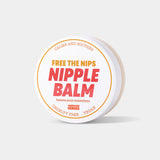
- free the nips nipple balm $17.90
- mother of all lip oil - caramel chestnut $16.90
- mother of all lip oil - moonshine $16.90
- mother of all lip oil - ripe cherry $16.90
- mother of all lip oil - sugar peach $16.90
- mother of all lip oil - sweet beet $16.90
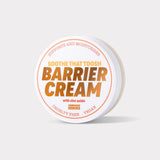
- soothe that toosh barrier diaper cream $17.90
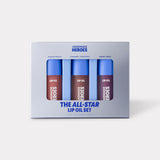
- the all-star lip oil set $45.00
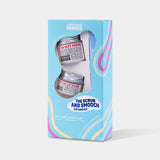
- the scrub & smooch lip care kit $30.80
- the scrub & smooch lip care kit with bakuchiol $34.80
Related ingredients
Back to the listSources
Show all 9 sources
- Burnett CL, Fiume MM, Bergfeld WF, Belsito DV, Hill RA, Klaassen CD, Liebler D, Marks JG Jr, Shank RC, Slaga TJ, Snyder PW, Andersen FA. Safety Assessment of Plant-Derived Fatty Acid Oils. International Journal of Toxicology. 2017;36(3 Suppl):51S–129S. Open source
- Lin TK, Zhong L, Santiago JL. Anti-Inflammatory and Skin Barrier Repair Effects of Topical Application of Some Plant Oils. International Journal of Molecular Sciences. 2017;19(1):70. Open source
- Poljšak N, Kočevar Glavač N. Vegetable Butters and Oils as Therapeutically and Cosmetically Active Ingredients for Dermal Use: A Review of Clinical Studies. Frontiers in Pharmacology. 2022;13:868461. Open source
- Danby SG, AlEnezi T, Sultan A, Lavender T, Chittock J, Brown K, Cork MJ. Effect of olive and sunflower seed oil on the adult skin barrier: implications for neonatal skin care. Pediatric Dermatology. 2013;30(1):42–50. Open source
- National Center for Biotechnology Information. PubChem Substance Record: Sunflower oil, SID 472397940 (source: FDA Global Substance Registration System). Open source
- Cooke A, Bedwell C, Campbell M, McGowan L, Ersser SJ, Lavender T. Skin care for healthy babies at term: A systematic review of the evidence. Midwifery. 2018;56:29–43. Open source
- Davis, Catherine. Sunflower Seeds and Oil. Food Source Information, Colorado State University. Undated; accessed November 22, 2026. Open source
- Harris, Stephen. Helianthus annuus L. (Asteraceae): Sunflower. Oxford University Plants 400. University of Oxford, Department of Biology. Undated; accessed November 22, 2026. Open source
- Drummond EBM, Bramel P, Lohwasser U, Giovannini P. Global Strategy for the Conservation and Use of Sunflower (Helianthus annuus) Genetic Resources. Bonn: Global Crop Diversity Trust; May 2023. DOI: 10.5281/zenodo.8192536. Background review, pp. 10, 24–27. Open source